The innocent archetype works for wellness brands by lowering perceived risk. Its cues — plain language, natural imagery, gentle promises, rounded forms and calm colour — tell a customer that nothing is being hidden and nothing is being over-sold. In a category where the questions are “will this hurt me?” and “am I doing this right?”, that reassurance converts unusually well. It also falls apart the moment a claim, an ingredient list or a customer conversation feels like a contradiction.
What follows is the practical version: the psychology, the brand cues, how to carry the archetype across packaging, site and social, where it breaks, and how to test whether it is doing any work at all.
Table of Contents
- What Is the Innocent Archetype?
- How the Innocent Archetype Works for Wellness Brands
- The brand cue to consumer response map
- What Psychological Needs Does It Meet?
- Cultural shorthand everyone already recognises
- How to Use It Across the Wellness Brand
- Positioning and naming
- Packaging and formulation language
- Website, social and email
- Customer experience and campaigns
- Innocent Archetype Examples for Wellness Brands
- Sleep
- Hydration
- Mindfulness
- Movement
- Everyday nutrition
- How to Make the Archetype Feel Authentic
- Common Mistakes Wellness Brands Make
- How to Measure Whether the Archetype Is Working
- Frequently Asked Questions
- What is the innocent brand archetype?
- Is the innocent archetype right for a wellness brand?
- How do I stop an innocent brand from looking childish?
- Can an innocent voice still make health claims responsibly?
- What is the difference between innocent and everyman archetypes?
- Which metrics tell you the archetype is working?
What Is the Innocent Archetype?
The Innocent brand archetype is a brand personality built on purity, simplicity, optimism and safety. It promises the customer an uncomplicated, wholesome route to feeling good instead of asking them to study labels, decode dosages or feel bad about their habits. In Jungian terms it belongs to the trio that pursues fulfilment through being rather than through force.
Its core traits, drawn from the brand personality framework that most strategists use:
- Core desire: safety, happiness, simplicity, being cared for and free from blame.
- Core fear: being taken advantage of, being left out, and finding out the thing you trusted was not what it seemed.
- Core motivation: do the right thing, and do it in a way that feels clean rather than clever.
- Voice: warm, plain, encouraging, low-jargon, never scolding.
- Visual cues: soft or bright colour, generous white space, rounded shapes, natural materials, daylight photography.
- Loyalty behaviour: repeat purchase with little comparison shopping, plus strong word-of-mouth referral to friends and family.
Purity is the trap in the name. Innocent does not mean ignorant, and it certainly does not mean a brand has nothing to say. The higher-level Innocent is simple but well made, warm but accurate. The lower-level version is simple because it has nothing to report, and that is the version customers read as evasive.
| Archetype | One-line definition |
|---|---|
| Innocent | Optimism, purity and simplicity; safety through being uncomplicated. |
| Sage | Truth and understanding through expertise and study. |
| Explorer | Freedom and authenticity through experience and novelty. |
| Hero | Mastery and achievement through courage and action. |
| Ruler | Control and stability through leadership and structure. |
| Caregiver | Service and belonging through generosity and nurture. |
| Creator | Expression and meaning through imagination and craft. |
| Lover | Intimacy and desire through beauty and sensuality. |
| Jester | Enjoyment and relief through humour and play. |
| Everyman | Belonging and authenticity through ordinariness and kinship. |
| Magician | Transformation through making the hidden reality visible. |
| Outlaw | Freedom and authenticity through disruption of convention. |
How the Innocent Archetype Works for Wellness Brands
It works by reducing risk rather than by adding information. A customer who cannot evaluate a magnesium glycinate label on technical merit falls back on signals. Innocence supplies exactly the signals a non-expert reads as safe: nothing loud, nothing hidden, nothing to decode. Once the guard comes down, the brand inherits something other archetypes struggle to buy — moral permission, as in this is the harmless choice.
The brand cue to consumer response map
Each cue below does a specific job. The strategic use column is where the archetype stops being decoration and starts being a decision.
| Brand cue | Consumer response it triggers | Strategic use in wellness |
|---|---|---|
| Short sentences, no jargon | Feels legible and therefore safe | Ingredient panels, dosing instructions, FAQs |
| Natural or everyday imagery | Reads as uncontaminated by the lab | Photography, packaging illustration, sourcing pages |
| Gentle promises, never guarantees | Allows the customer to stay in control | All benefit copy and paid social |
| Rounded forms and soft colour | Signals care rather than correction | Identity, carton, app interface |
| White space and slow layouts | Signals nothing to hide | Product pages, print inserts, email |
| Disclosed limits and honest sourcing | Builds credibility with informed buyers | Third-party testing, sourcing transparency |
| Third-person friendly tone | Feels like a friend, not a lecture | Brand voice guidelines, scripts |
Wellness is one of the few categories where the archetypal fit is genuinely structural. The customer is buying something ingested, applied or absorbed, and the purchase is often emotional. Caregiver answers who is looking after me; Everyman answers is this like me; Sage answers is this true. Innocence is the only one of the twelve that answers both will this hurt me and am I doing this right, which is why it outperforms its visibility in wellness and why a failure is so costly when it happens.
The same logic explains the risk. A brand that has asked for moral permission gets judged on whether it deserved it. One unverified claim, one stockist complaint, one unexplained ingredient list moves the customer from safe to manipulated in a single encounter, and Innocent brands have no credibility cushion to absorb that fall.
What Psychological Needs Does It Meet?
Six needs sit underneath the cues, and a brand that knows them can decide which one it is actually serving.
- Reassurance about harm. The dominant fear in wellness is harm from something applied to the body. Innocence answers it before the customer has to ask.
- Permission to simplify. People are tired of being told they must optimise everything. Innocence offers a smaller, kinder set of decisions.
- A better self, without blame. The aspirational pull is gentle rather than status-driven: not a transformed body, but a calmer evening.
- Nostalgia. Innocence borrows from remembered simplicity — a grandmother’s garden, a childhood cereal — which is why packaging that looks hand-made or hand-picked travels so well with adult buyers.
- Absence of judgement. The brand never implies the customer failed at something first. In a category full of before-and-after imagery, that silence is a differentiator.
- Belonging to a kind group. Innocent buyers expect to be treated as a friend who has been let in on something simple, and they refer accordingly.
Perceived vulnerability feeds the whole thing. An Innocent brand shows itself as open, and openness invites trust in return — but it also means a single piece of information can expose it.
Cultural shorthand everyone already recognises
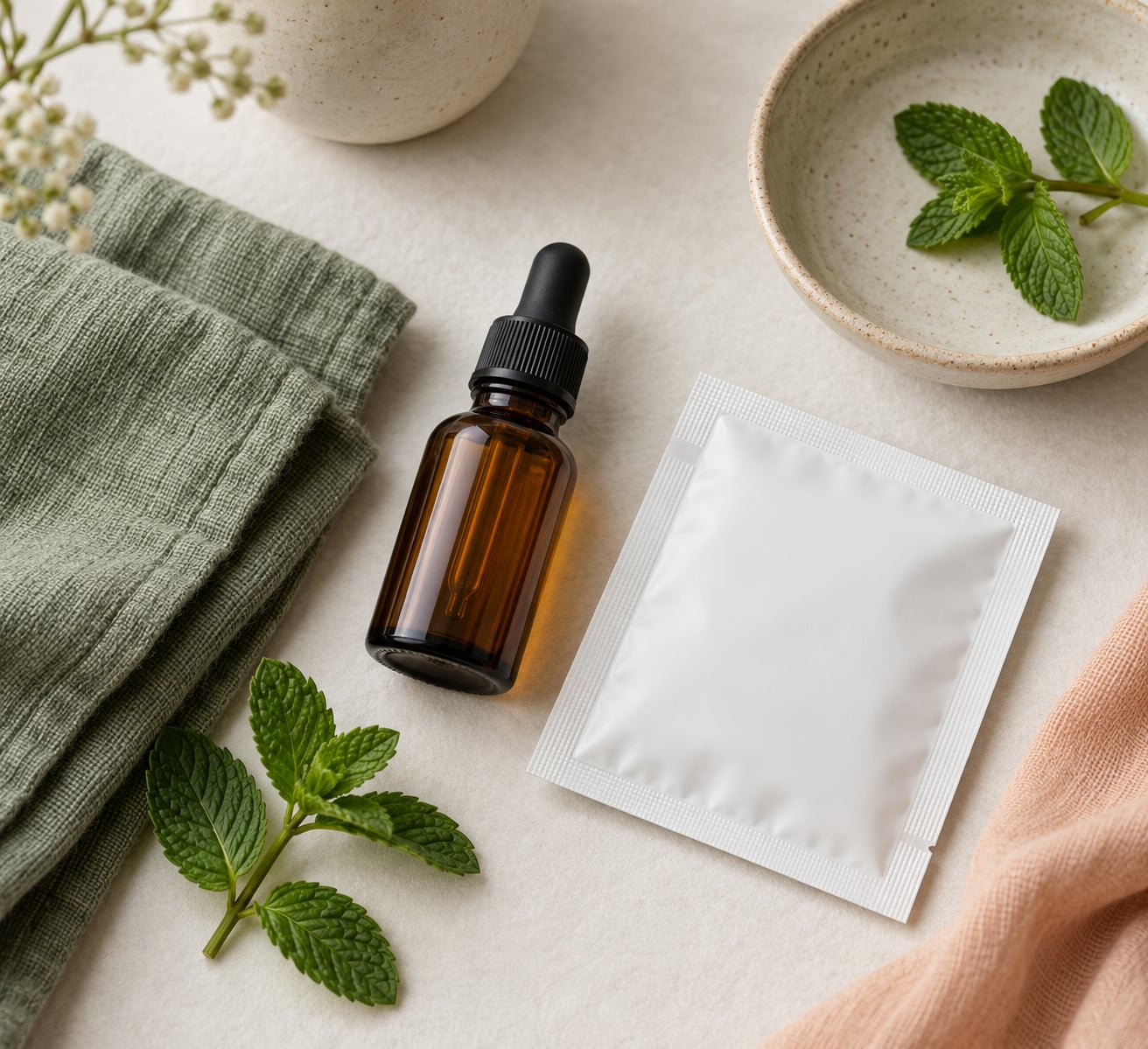
The archetype draws on characters people carry for free: the goodness in Peanuts, Tinker Bell’s try-everything, the foundling optimism of Oliver Twist. Wellness brands borrow the same shorthand, usually through small, childlike scale cues rather than literal illustration. A rounded dropper bottle and a hand-drawn leaf do more work here than a paragraph of copy about purity.
How to Use It Across the Wellness Brand
Archetypes fail as a logo exercise and work as a decision rule. Apply it at every point where a customer decides whether to believe you.
Positioning and naming
Write the position as a single simple sentence a customer could repeat to a friend. Short, unownable names work because they carry no complexity to decode. Check any name against a trademark search before you fall in love with it, since a simple name is a poor one to lose.
Packaging and formulation language
Rounded containers, muted or bright single-hue palettes, sans serif type with generous leading, and a front panel that says what the product is in under eight words. Keep the ingredient panel complete and legible; in this archetype, transparency is not a compliance detail, it is the brand asset.
Website, social and email
Same voice everywhere. The site should read calm and unhurried with wide line lengths, short paragraphs and real photography of people in ordinary settings. Social can carry small, specific, daily-usage content rather than transformation claims, and email should behave like a note from someone who knows you, not a campaign blast.
Customer experience and campaigns
Reply to questions in the brand voice, ship inserts that answer a genuine doubt, and build campaigns around ordinary moments. Avoid before-and-after framing and avoid the printed word detox, which belongs to the Outlaw, not the Innocent.
| Innocent voice in wellness | Reads better |
|---|---|
| Cleanse away the build-up from a long week | Gently lifts the build-up from a long week |
| Our formula is purity, tested and proven | Three ingredients, each listed on the panel |
| You deserve the best version of you | Made for the ten minutes before bed |
| Detox your body in seven days | A gentle daily habit, not a programme |
| Clinically proven peace of mind | Third-party tested, results published |
Pairing helps. Innocent works best as a primary with Caregiver, Explorer or Sage underneath, which keeps it from flattening. A supplement that leads with simplicity and backs it with sourcing is Innocent primary and Sage secondary, and that pairing is the difference between warm and credible.
Innocent Archetype Examples for Wellness Brands
Five imagined brands, each using the same archetype in a different wellness category. The point is what changes between them, not the mood.
Sleep
A magnesium drink sold as a small nightly ritual. The pack shows a single rounded sachet, a muted evening palette and one line of copy about winding down. Evidence sits in a plain results page, because the ingredient story is where the purchase decision actually gets made. The risk is promising rest to people who are not sleeping, so the copy stays about routine rather than insomnia.
Hydration
A powder sachet brand that treats water as a pleasure rather than a chore: soft illustration, citrus and mint naming, a colour per flavour, and a quiz that recommends a blend. Innocence here comes from friendliness, and the discipline is resisting the temptation to make the quiz feel like a diagnostic.
Mindfulness
A short daily practice app with a five-day introduction, no streak shaming, and a voice that never tells you you failed. The Innocence risk is highest here, because the category is saturated with unearned calm, so the differentiation lives in a named method and a stated limit on what the practice does not do.
Movement
A beginner strength programme designed for people who feel excluded from fitness. Photography of ordinary people, unfussy cotton, language about starting small. Its Caregiver secondary is what keeps it credible, and the copy should talk about consistency rather than bodies.
Everyday nutrition
A meal replacement aimed at busy parents. Innocent cues in the illustration and the promise of no decision-making, with full nutritional panels and plain-language explanation of what the product does not replace. The tension to manage is convenience versus honesty, and the brand that loses that argument loses the archetype too.
How to Make the Archetype Feel Authentic
Authenticity here is not a tone choice, it is an evidence position. The warmth is the wrapper; what is inside has to hold up.
Use plain language that a customer can repeat. If your benefit sentence needs a translation, rewrite it. Innocence and obscurity are opposites.
Substantiate the wellness claims you keep. Keep claims to what evidence supports, cite the source on the page, and take advice from a qualified clinician or registered dietitian on how you frame any physiological statement. For personal guidance, a doctor, pharmacist or registered dietitian is the right person, not a brand.
Disclose what is in the product and what is not. Full ingredient lists, sourcing, allergen information, third-party test results and an honest account of limitations build more Innocent credibility than any amount of purity language.
Keep product clarity. The promise on the front should be the thing in the container. A gentle voice over a complicated or unfamiliar product is the fastest route to feeling manipulative.
Align visual promise with experience. If the site looks like a calm meadow and the delivery arrives in a loud box, the archetype breaks at the last point of contact.
A five-question audit: can a customer describe what you sell in one unprompted sentence; does any claim outrun its evidence; is the full ingredient and sourcing information easy to find; would the same warmth be accurate on a bad review; and is your calm or your excitement doing the persuading? Three or more hard answers means the Innocence is decorative rather than structural.
Common Mistakes Wellness Brands Make
Overusing innocence. Everyone in the category is already pastel and kind, so warmth stops differentiating. The correction is one specific, arguable thing nobody else is saying, kept in a calm voice.
Vague purity claims. Words like clean, pure and toxin-free are not evidence and, in several markets, are legally constrained. The correction is a plain statement of what is absent, what is present, and how you know.
Babyish design. Cartoon mascots and primary-colour packaging in an adult category read as condescending. The correction is to keep the rounded forms and drop the childish furniture, and to check the pack next to a competitor at shelf distance.
Unsupported natural language. Natural does not mean better, and the correction is to treat natural as an ingredient fact rather than a verdict. Say what the ingredient does instead of what it is not competing with.
Emotional overpromising. “Finally, rest you can trust” implies a health outcome nobody substantiated. The correction is to promise the ritual, not the result, and to say plainly that results vary.
Inconsistent signals. A gentle site with a hard-sell funnel is the most common break, and it is usually a marketing pressure rather than a brand failure. The correction is one voice document that a media buyer cannot edit around.
How to Measure Whether the Archetype Is Working
Warmth is easy to like and hard to prove, so test it rather than assume it.
Run aided and unaided association. Give respondents your category and ask which brands come to mind unprompted, then show your identity and ask which three words describe it. You want innocence words — simple, gentle, honest, calm — and you want to know what else is riding along, because another archetype sneaking in is usually the answer to a sales problem.
Measure comprehension next. Show the front panel and the hero section for five seconds and ask what the product does. Innocence that lowers comprehension is communicating a mood rather than a product.
Rate warmth and trust separately. A high warmth score with an average trust score is the warning sign, since it means the brand is liked without being believed.
Use concept tests against the alternative. Test Innocent against Everyman, Caregiver and Sage treatments of the same product and compare conversion, not just preference.
Run small qualitative sessions. Fifteen interviews will show you the moment a customer hears a claim and stops believing the rest of the page, and interviews routinely catch what scaled surveys flatten.
Finally, keep emotional appeal and purchase intent in separate columns. Warmth that does not move intent is decoration; intent that rises while trust falls is a warning you want early.
Frequently Asked Questions
What is the innocent brand archetype?
The innocent brand archetype is a brand personality built on purity, simplicity, optimism and safety. It promises an uncomplicated, wholesome route to feeling good instead of asking customers to study labels or decode dosages. Its voice is warm, plain and encouraging, its visual identity soft and uncluttered, and its loyalty behaviour is repeat purchase driven by reassurance rather than comparison.
Is the innocent archetype right for a wellness brand?
It suits brands whose products are simple, gentle and hard for customers to judge on technical merit, such as supplements, clean beauty, baby and pet care and everyday food and drink. It suits them because wellness buyers ask two questions, will this harm me and am I doing this right, and Innocence is the only archetype that answers both. It is a poor fit where a product is complex, technical or clinical.
How do I stop an innocent brand from looking childish?
Keep the rounded forms, generous white space and soft colour, and drop the mascots, cartoon lettering and primary-colour packaging that read as toy-like in an adult category. Judge the pack at shelf distance against a competitor, not in isolation on a mood board. Warmth in this archetype should come from restraint and clarity, not from decoration.
Can an innocent voice still make health claims responsibly?
Yes, but the voice has to fit the evidence. Innocent voice and rigorous claims are not opposites, and pairing Innocence with a Sage secondary archetype is a common way to hold both. Keep claims to what is substantiated, publish the source, disclose ingredients and third-party testing, and take wording guidance from a qualified clinician or registered dietitian. For personal advice, speak to a doctor or pharmacist.
What is the difference between innocent and everyman archetypes?
Innocence promises purity, safety and a simpler path, usually told from the brand’s point of view. Everyman promises belonging and ordinariness, told from the customer’s, with the brand saying that its product is nothing special and that is exactly why it works for people like you. Everyman earns trust through shared identity, Innocence through the removal of complexity.
Which metrics tell you the archetype is working?
Watch unaided and aided association, unaided comprehension of the front panel, and warmth and trust scores rated separately. A high warmth score with an average trust score means the brand is liked but not believed, which is the early signal of trouble. Track those against purchase intent and repeat purchase, and keep emotional appeal and intent in separate columns so decoration does not read as success.
Start with the sentence your customer would repeat about you. How the innocent archetype works for wellness brands comes down to whether what sits inside the pack backs up the warmth outside it. If that sentence cannot be made simple, specific and fully substantiated, the archetype reads as decoration, and decoration in a calm category is the fastest way to be ignored.