
The everyman archetype builds mass appeal by lowering the cost of identification: it presents a brand as the sensible, unpretentious choice that is available to anyone, so millions of people can recognize themselves in it at the same time. Nobody has to trade down, signal status, or learn a private language to join in. That is a rare position in marketing, where most brands are quietly asking a crowd to pick a side.
I have watched this play out repeatedly in strategy work. A company that spent months on a heroic, aspirational story discovered its research participants liked the brand just fine but could not explain why it was for them. The same company, repositioned around a plain-spoken working-person character, tested with a much wider sample and a shorter explanation. The mechanism behind that shift is what this article breaks down.
Below is the definition, the four-part mechanism, the psychological needs it taps, current brand examples, the ways it fails, and a way to test whether it works for your own brand.
Table of Contents
- What is the everyman archetype?
- How the everyman archetype builds mass appeal
- How relatability makes a brand easier to choose
- How universality expands the audience beyond one group
- How the everyman archetype builds appeal across demographics
- What psychological needs does the everyman appeal to?
- Why everyday authenticity can create trust
- How can brands use the everyman archetype without becoming generic?
- Which brands and characters demonstrate everyman appeal?
- What are the risks of overusing the everyman archetype?
- How can marketers test whether an everyman concept resonates?
- Frequently Asked Questions
- Is the everyman archetype the same as the everywoman archetype?
- What makes a brand character feel like an everyman?
- Which product categories benefit most from everyman positioning?
- How is the everyman archetype different from the underdog?
- Can a premium or luxury brand use everyman appeal?
- How can a brand make ordinary values feel distinctive?
- Conclusion: Start with recognizable everyday greatness
What is the everyman archetype?
The Everyman archetype is a brand personality built on ordinariness: a down-to-earth, unpretentious character who wants to belong, fits in, and does ordinary things well. The brand promises no status, no exclusivity, and no special knowledge. It is the sensible option, which is exactly why so many people can claim it.
The name comes from Carl Jung, who proposed that recurring figures across myths, religion and literature reflect a shared collective unconscious. Mark and Carol Pearson later adapted twelve of those figures into a marketing framework, and this is the version most brand strategists actually use. Jung is the ancestor of the idea; the Pearson adaptation is the tool in the toolbox. You can read more about how the framework is used, and where it strains, in the rest of this piece.
Core characteristics of the everyman brand archetype:
- Relatability – the character behaves the way the audience already behaves.
- Non-elitism – no gatekeeping, no jargon, no feeling that you need to know more to belong.
- Warmth – friendly, familiar, safe to spend time with.
- Modesty – claims are modest and the brand does not boast.
- Everyday competence – good at normal, useful things rather than exceptional ones.
- Humour and self-deprecation – the brand can laugh at itself.
- Plain language – short sentences, everyday words, conversational tone.
- Broad identity fit – deliberately designed to be recognizable across segments.
One naming note before we go further. You will see this archetype called the Everyman, the Regular Guy, the Regular Person, or occasionally the Personage, and you will see Rebel and Outlaw used interchangeably for a neighbouring archetype. These are the same positions wearing different labels. Pick one name for your own team and stop relitigating it.
How the everyman archetype builds mass appeal
Mass appeal comes from four mechanisms working together: a low identification threshold, an absence of status threat, category breadth across identities, and a relationship framing instead of a reach framing. Remove any one of them and appeal narrows sharply.
- Low identification threshold. The audience does not need to change, learn, or signal anything to see themselves in the brand. Each person supplies their own story into the character. Compare that with a brand built on mastery or exclusivity, where the viewer has to identify with a version of themselves they do not currently recognise.
- No status anxiety to reject. Most aspirational advertising carries a silent threat: buy this or fall behind. The Everyman removes that threat entirely, so a first-time buyer and a loyal customer read the same message without feeling judged. Nobody has to give up a status gain to join in.
- Category breadth. Because the character is not defined by taste, age or income, one brand can serve many identities at once. A sensible grocery bag appeals to a parent on a weekday, a student on a budget and a cook at a market stall. The character stays constant while the reasons change.
- Relationship over reach. The Everyman speaks like a familiar person rather than a broadcast. That conversational voice invites response, and response is what turns passive awareness into recall when someone later needs the category.
How relatability makes a brand easier to choose
Relatability shortens the decision. When a brand shows behaviour the audience recognises – a flat white handed over with a joke, a plain logo, a spokesperson who admits when something breaks – the gap between the ad and their own life collapses. There is nothing to reconcile, so less attention is spent deciding whether the brand is for them. In my experience that is where the conversion lift shows up: not in the first impression, but in the shortened second look.
It also protects against category noise. A crowded shelf or a crowded feed favours the brand whose message needs no translation, because attention is the scarce resource and the plainest message travels furthest.
How universality expands the audience beyond one group
Universality is what turns a relatable character into a mass-market one. A character anchored to one lifestyle, age or region can be beloved and still be narrow. The Everyman is defined by attitude rather than circumstance, so the same plainness reads differently across markets: dependable in one country, funny in another, warm somewhere else entirely.
This is also why the archetype travels. Brands that sell to a segment tied to identity – sport, music, subculture – borrow intensity. The Everyman trades intensity for breadth, and gets reach in exchange. One segmentation write-up I read framed the mechanism for a specific audience as a fear of not fitting in, which is a useful way to think about the tension the character resolves: belonging is the product being sold, not a side effect.
How the everyman archetype builds appeal across demographics
Everyman positioning widens the audience the same way a well-placed sign does: it speaks to people who did not come in looking. The trade is intensity for reach. A niche brand can charge more and be defended more easily, but it can only ever be chosen by the people who already share its taste. The Everyman brand can be chosen by nearly everyone in a category, which is why it shows up so often in businesses where penetration matters more than margin per customer.
What psychological needs does the everyman appeal to?
The Everyman works because it answers several ordinary human needs at once, and it answers them without asking the audience to perform.
- Belonging. The character is a member of the group, not someone above it or fighting it. The implicit promise is that you are normal, and normal is good enough.
- Competence. The everyday competence cue reassures that ordinary decisions produce ordinary good results. This is why the archetype works so well in grocery, finance and home services, where the buyer’s fear is botching something basic.
- Safety and predictability. Nothing about the character is volatile. Stability is the emotional product in uncertain categories.
- Authenticity. People read effortlessness as honesty. A brand that admits it is not the fanciest option gets credit for telling the truth.
- Permission. This is the most underrated one. The Everyman grants permission to the audience to succeed without a performance of success – no aspirational gymnastics, no visible status ladder.
Notice that none of these needs require status. That is precisely why the reach is broad, and also why the pricing ceiling exists.
Why everyday authenticity can create trust
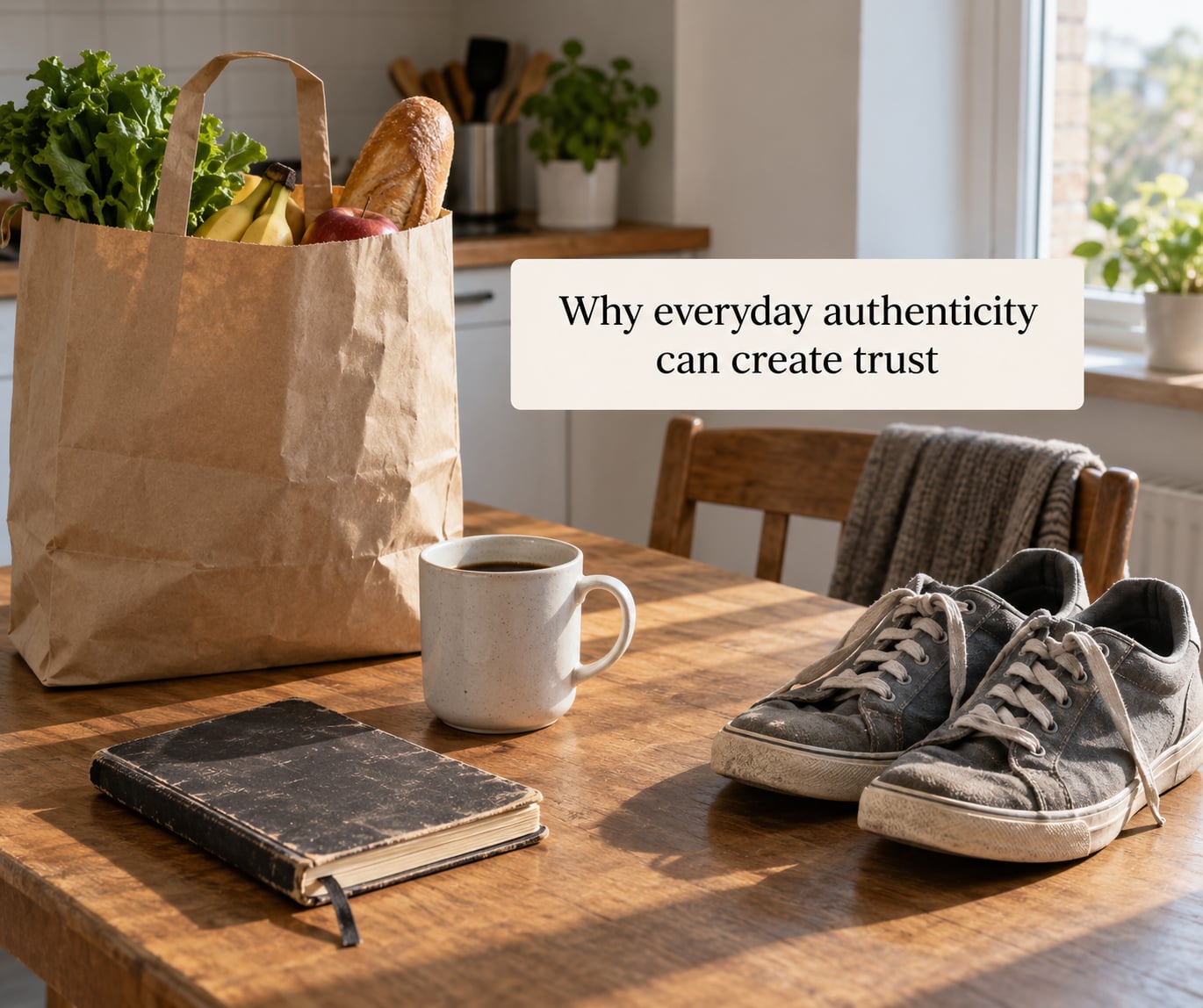
Trust accumulates when a brand’s language matches its surroundings. Everyday authenticity shows up as a plain visual palette, a real location instead of a studio, a spokesperson who is visibly one of the audience, and promises small enough to keep. When the brand keeps those promises, the ordinariness reads as integrity rather than as a lack of ambition.
The failure mode is manufactured ordinariness. A brand stages a fake kitchen, hires an actor who is obviously acting, and claims humility in a tone that carries a hidden ranking. Audiences are forgiving about polish and unforgiving about insincerity. The test I use is simple: does the brand say anything about itself, or only about the person using it? The Everyman does the latter.
Consistency matters here more than originality. Once a brand claims plainness, every later touch – packaging, customer service script, product support page – has to honour it. One confident corporate sentence undoes a season of chatty posts.
How can brands use the everyman archetype without becoming generic?
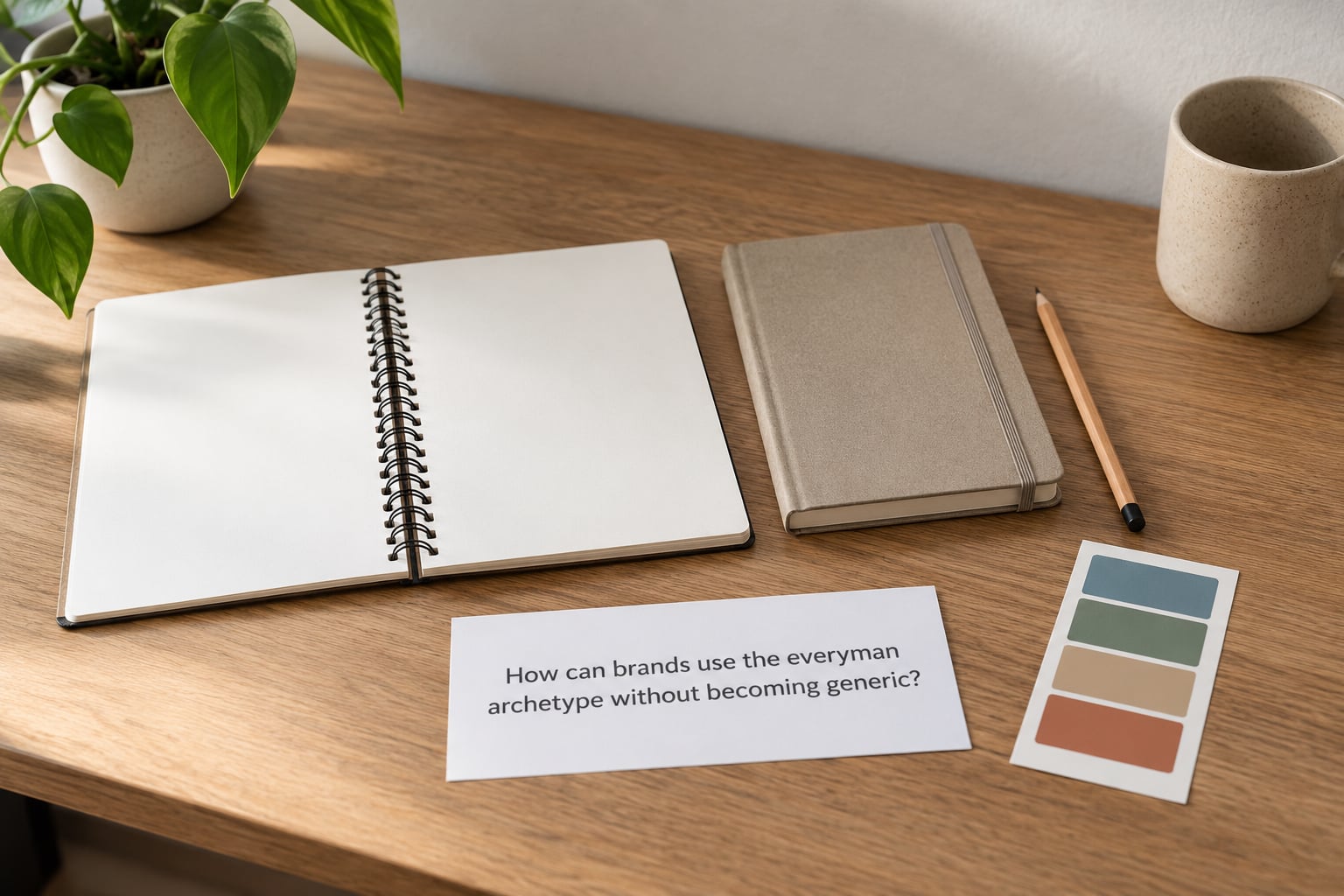
Genericness comes from ordinariness without a point of view. The fix is to keep the relatability and add one specific, defensible choice. Five moves that work:
- Pick a real audience tension, not an audience label. “Everyday people” is not a tension. “People who want a reliable answer without paying someone to give it” is. One agency explainer puts the Everyman tactics as inclusivity, conversation and connection – all three work harder when they point at a specific friction.
- Give the character one specific flaw or habit. A wholly bland persona is unmemorable. Give the spokesperson a running joke, a stubborn preference, a recognizable mistake. Personality comes from edges, not from niceness.
- Build a small visual system and keep it. Two colours, one typeface, one recurring object. The 2010s advice pages recommended simplicity without specifying a system. Simplicity that changes every quarter reads as nothing at all.
- Make one claim that competitors cannot copy. Often the claim is unglamorous – a longer warranty, a repair guarantee, a free local repair visit. Concrete and checkable beats grand.
- Write a tone-of-voice rule with a boundary. “Friendly” is unusable. “We never mention competitors, and we admit when the product is the wrong choice” is a rule a writer can follow and a reviewer can enforce.
None of that requires abandoning plainness. It requires plainness plus a point of view.
Which brands and characters demonstrate everyman appeal?
The clearest examples are brands where the ordinary character carries the sales rather than the packaging. Reading across current examples, the same handful of traits keep doing the work.
| Brand or character | Category | Everyman trait executed | Mechanism triggered |
|---|---|---|---|
| IKEA | Home furnishing | Flat-pack practicality, plain signage, Swedish matter-of-factness | Ordinary competence sold as value |
| Uniqlo | Apparel | Red square logo, minimal seasonal campaigns, no aspirational styling | Universal accessibility; a logo analysis tool scored its mark 81/100 for exactly this |
| Costco | Retail | Plain bulk packaging, no premium display language | Trust through obviousness; the customer sees the same thing everyone else does |
| Chipotle | Fast casual | Simple menu, visible assembly, plain interiors | Everyday competence in an everyday setting |
| Duolingo | Learning app | A deliberately awkward, self-mocking owl instead of a polished mentor | Humour removes the status cost of failing |
| Americas Best Eyes | Optical retail | Plain store signage, straightforward pricing communication | Low-pressure relationship framing |
| Patagonia-style founder storytelling | Outdoor wear | Working-person hero, no gloss on the achievement | Relatability plus competence |
| Jacamo | Menswear | Working-class London setting, honest sizing, inclusive framing | Belonging inside a category that excluded people |
| Political outsider candidates | Politics | Anti-elite framing, deliberately unscripted delivery | Belonging as the explicit product |
| Local bank or credit union cooperatives | Financial services | Named local member, plain language, no prestige cues | Safety plus local familiarity |
Read across the column of traits and notice what is missing: almost none of these brands lead with expertise or exclusivity. Where the older agency lists still reach for the same five or six names, the useful shift is toward brands where ordinariness is a deliberate operating choice rather than a budget limitation.
People-branded archetypes follow the same script, which is why founder-led companies so often drift toward Hero. A founder presented as a working person with an ordinary job and an ordinary week stays Everyman. The same founder presented as a visionary who alone sees the future is a different archetype entirely, and a much narrower one.
What are the risks of overusing the everyman archetype?
The Everyman is over-applied because it works. That is exactly why it is worth knowing where it breaks. Five risks, in rough order of how often they damage a brand:
- Blandness. If the character has no opinion, no flaw and no specific claim, the brand becomes interchangeable with its category.
- A pricing ceiling. Plainness signals value, and value signals a ceiling. A brand that later wants to trade up has to earn new permission, because the existing character promised it would never become remote.
- Tokenism. Casting ordinary people as stand-ins for a demographic rather than as people with their own lives reads as condescending, and audiences have gotten good at spotting it.
- Cultural narrowness. Everyman assumes the ordinary experience is shared. It is not uniform across cultures, and “just be normal” can land very differently depending on what the audience is being asked to accept as normal.
- Confusion with its neighbours. Innocent, Caregiver and Jester all borrow accessibility cues. Borrow the warmth and end up as Innocent. Borrow the caretaking and end up as Caregiver. Borrow the jokes and end up as Jester.
Two structural differences keep the archetype distinct. The Everyman wants to belong; the Caregiver wants to nurture. The Everyman is modest; the Hero wants achievement. The underdog, by contrast, is not an archetype so much as a plot position – a character defined by an obstacle. Underdog brands rally around a fight, which draws in people who enjoy watching, not just people who relate. An underdog brand can still be hugely popular, but its appeal leans on the conflict rather than on the ordinariness.
How can marketers test whether an everyman concept resonates?
The honest starting point: archetype work is a positioning tool, not a performance predictor. Peer-reviewed work exists on whether brand-archetype congruence affects consumer response, including Bechter’s 2016 study of advertising between archetype and brand personality, which used everyman-category examples such as soft drinks and beer. Roberts’ 2018 thesis tested archetypal branding effects directly and found the framework harder to operationalise than its popularity suggests. More recent content analysis, such as Jacob’s work on archetypes and endorsers on Instagram, applies the typology to how creators actually communicate. The framework is useful for choosing direction. It does not give you a number to put in a board deck, and a vendor who promises otherwise is selling something.
With that caveat, here is a workable five-step test:
- Unprompted recognition. Show respondents the brand with no archetype framing and ask who it is for. If they describe the audience in ordinary, unpretentious terms, the character is already reading. If they talk about quality or expertise, you are running a Sage or Hero position whatever the deck says.
- Identification depth. Ask what the brand has in common with them, unprompted. Shallow answers point at category fit; specific answers point at character fit.
- Segment spread. Run the same association across age, income and region groups. Strong Everyman signals hold up across segments; weak ones cluster in one.
- Overreach test. Ask whether the brand would suit them, then ask which competing brand would too. If everything reads the same, you have relatability without differentiation.
- Behavioural follow-up. Track repeat purchase and word of mouth against a baseline, not just recall. Relatability shows up in retention and recommendation long before it shows up in awareness.
Do the interviews without the archetype vocabulary in the room. If you mention “Everyman”, you get agreement and no information. The other recurring practitioner complaint is that the framework produces a label rather than a strategy – these five steps are how you turn the label into something a creative team can use.
Frequently Asked Questions
Is the everyman archetype the same as the everywoman archetype?
In the Pearson twelve-archetype set, everyman is a gender-neutral position: it describes a character defined by ordinariness, belonging and non-pretension rather than by gender. The label everywoman is not one of the twelve, so most brand frameworks that use it are a gendered marketing variant of the same idea, or an entirely separate framework from the psychology literature. Treat the two as marketing convention rather than as distinct analytical categories when you see both used in the same deck.
What makes a brand character feel like an everyman?
Five signals do most of the work. The voice is conversational and uses plain words. The spokesperson looks like the audience and admits mistakes. The visual identity is simple and consistent rather than fashionable. The claims are modest and specific, such as a repair guarantee rather than a boast. And the brand never implies you need special knowledge or status to join in. If you can tick four of the five, you are close to the archetype.
Which product categories benefit most from everyman positioning?
Categories where the buyer is solving an everyday problem and worries about getting it wrong: grocery, home improvement, optical, financial services, telecoms, insurance, fast casual food and household utilities. The archetype works because it signals competence at ordinary tasks and removes the anxiety of a costly mistake. It suits less well in categories where the purchase is a status object or where the buyer actively wants to display taste.
How is the everyman archetype different from the underdog?
The Everyman is defined by ordinariness: no special status, no gatekeeping, everyone can relate. The underdog is defined by an obstacle: a brand or person competing against something larger. An Everyman brand sells belonging and competence, while an underdog brand sells the fight. They can overlap, and some brands run both, but the difference matters strategically. Underdog framing energises supporters and creates conflict. Everyman framing widens the audience and lowers the barrier to choosing.
Can a premium or luxury brand use everyman appeal?
It can, but not in the pure form, and the attempt costs something. The Everyman signals value and absence of pretension, which sits badly with price-led luxury. What actually travels upward is the persona rather than the position: an ordinary founder talking about craft, a house brand with an honest origin story, or a brand that stays approachable while the product is not. Treat Everyman appeal as a relationship strategy inside premium brands, never as the price story itself.
How can a brand make ordinary values feel distinctive?
Add specificity to the ordinariness. Name the exact audience tension rather than saying everyone. Give the character one recognisable habit, running joke or stubborn preference so the persona has an edge. Commit to a small visual system and keep it for years instead of refreshing it each season. And make one checkable claim competitors cannot copy, usually something unglamorous such as a repair guarantee or a free local visit.
Conclusion: Start with recognizable everyday greatness
How the everyman archetype builds mass appeal comes down to one thing: it asks for nothing before you buy. No aspiration to prove, no taste to display, no knowledge to acquire. That is why identification happens at a low cost, why the appeal survives across age and income, and why the resulting loyalty reads as personal rather than transactional.
Start with one specific human truth – a real friction your customer lives with – and give the ordinary character a sharp point of view around it. Then test it the blunt way: describe the brand to someone who has never heard of it and see whether they say “that is exactly my kind of thing”. If they do, the appeal is already working before you spend anything on media.