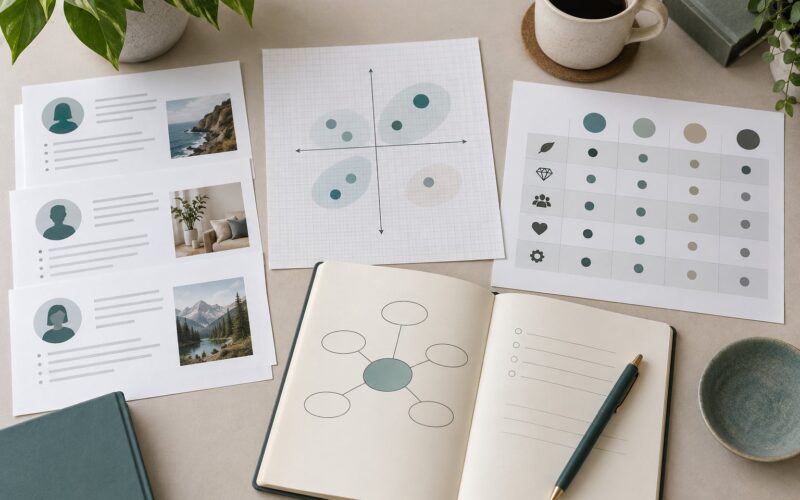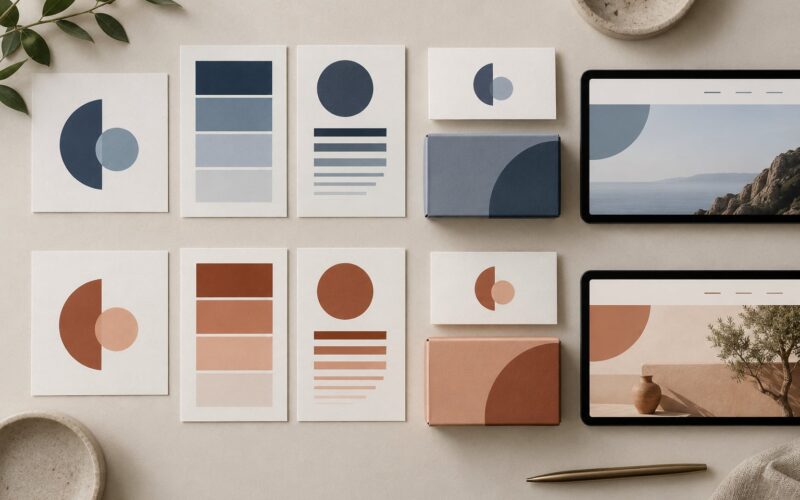
To use brand archetypes in modern marketing, you turn the brand’s core promise into a character that filters every decision downstream: the words you write, the pictures you commission, the offers you design and the channels you post in. Pick the archetype your evidence supports, give it a secondary support, then wire it into positioning, messaging and measurement. Most teams can get through it in an afternoon, and the hard part is the choosing, not the designing.
Archetypes are not new, and they are not new under a marketing label. Carl Jung proposed the collective unconscious in the mid-20th century, and Margaret Mark and Carol S. Pearson turned it into a marketing system in The Hero and the Outlaw, published in 2001. Their twelve character types have been argued over since, and the framework has real limits. Used as a decision filter it sharpens a brand; used as a mood-board exercise it produces wallpaper.
Here is the working process, the mistakes that trip people up, and how to check whether any of it is working.
Table of Contents
- What You Need Before You Pick an Archetype
- A written brand purpose
- Audience insight, not a demographic list
- The competitive set
- Real customer language
- A channel or campaign brief
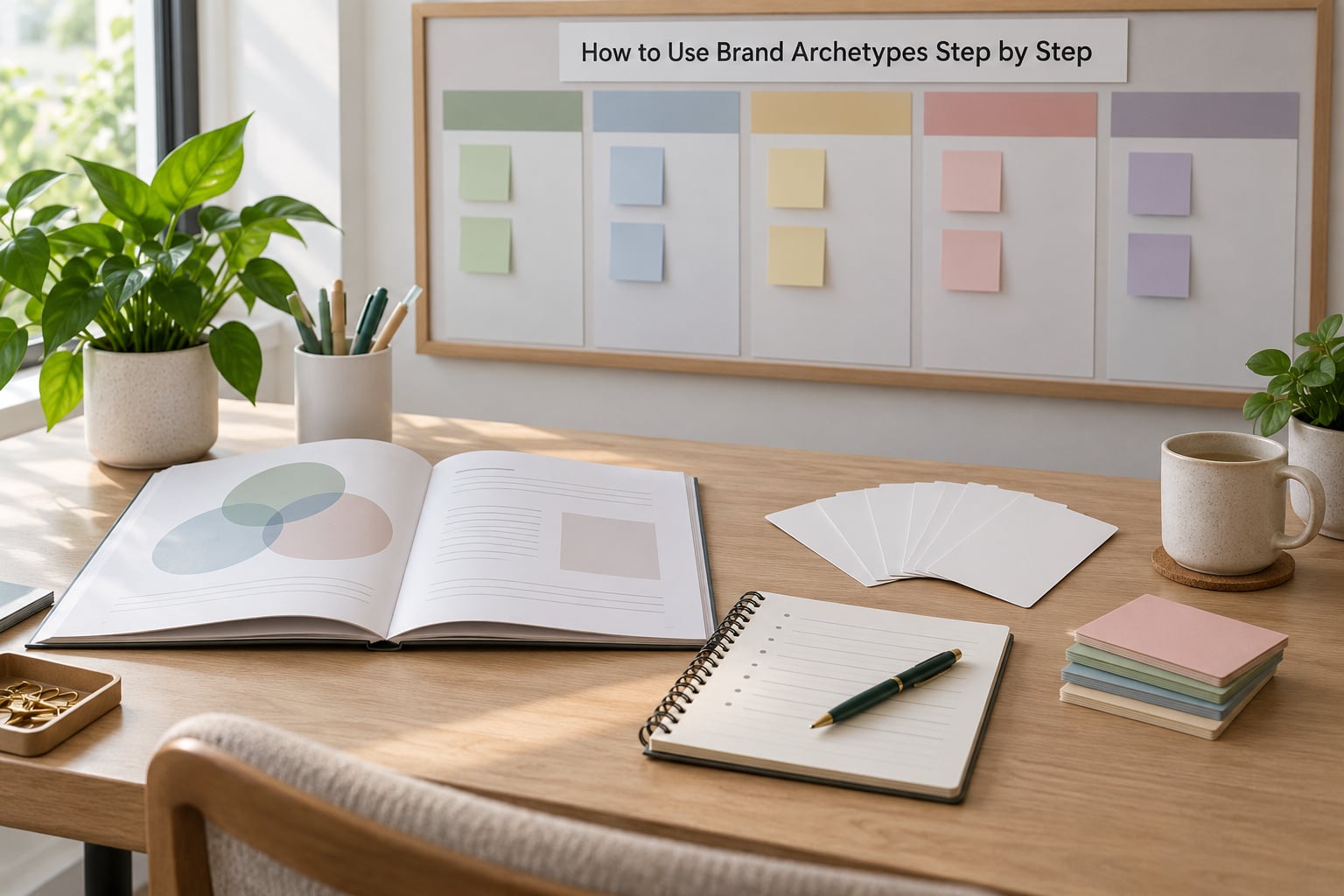
- How to Use Brand Archetypes Step by Step
- Start with the brand’s core promise
- Map audience needs and brand tensions
- Choose the best-fit archetype
- Translate the archetype into positioning
- Build messages and campaigns with brand archetypes in every channel
- Test and refine the archetype strategy
- Common Mistakes That Flatten a Brand
- Frequently Asked Questions
- How do I know which brand archetype is right for my brand?
- Can a brand use more than one brand archetype?
- Should a brand archetype change when the target audience changes?
- How do I use brand archetypes without making the brand look like a stereotype?
- What is the difference between a brand archetype and a visual style?
- How can I measure whether my brand archetype is working?
- Conclusion: One First Action
What You Need Before You Pick an Archetype
Archetype selection goes wrong when the team starts with the twelve names and works backwards to a brand. You need five inputs first, and most of them exist as documents you already have.
A written brand purpose
One sentence on what the brand exists to do for whom. If you cannot write it, the archetype will be doing the job of a strategy you have not done yet.
Audience insight, not a demographic list
Age and income do not pick an archetype. What people are trying to escape, what they are anxious about and what they want to feel after they buy does. Psychographics beat segments for this job.
The competitive set
List the five brands a buyer would put you next to, and the archetype each one already occupies in their minds. This list is the constraint that stops you choosing something the whole category already owns.
Real customer language
Twenty to thirty verbatim quotes from reviews, sales calls or support tickets. Customer wording tells you which tensions are live in a way your internal deck never will.
A channel or campaign brief
An archetype with nothing to do produces nothing. Bring the actual brief: the launch, the quarter, the channel mix, the conversion you are chasing. The archetype is only useful once there is a decision it can settle.
How to Use Brand Archetypes Step by Step
Start with the brand’s core promise
Define the brand’s purpose, its distinctive value, its three to five real strengths and the emotional benefit underneath the functional one. Write it in one page and get the leadership team to argue about it. An archetype layered on top of an unagreed promise just hides the argument.
The test is whether a customer could repeat your promise back after hearing it once. If they can’t, the promise needs work before the archetype does.
Map audience needs and brand tensions
Archetypes express tensions, and tension is where the buying decision happens. For your audience, write down the practical problem they want solved, the emotional outcome they want afterwards, the anxieties holding them back and the aspiration pulling them forward. Then name the tension between those last two. “I want to look like I know what I’m doing but I’m out of my depth” is a tension. “I want better ROI” is not.
Look for the tension in your customer quotes too. The sentence people repeat back to you is usually the one sitting right on it.
Choose the best-fit archetype
Run the twelve candidates against three filters: does it match the promise you just wrote, does it match the tensions you just mapped, and is the space next to your competitive set actually empty. A candidate that passes two out of three is not your archetype.
Mark and Pearson group the twelve into four desires, which is a quicker way to narrow the field:
- Risk and mastery: Hero, Outlaw, Magician, Ruler.
- Belonging and enjoyment: Jester, Lover, Sage, Innocent.
- Stability and control: Everyman, Caregiver, Creator, Ruler.
- Independence and fulfilment: Explorer, Rebel, Magician, Hero.
Some archetypes sit in two groups, and that is useful information: an archetype that straddles groups tends to suit a brand with a dual promise.
Then lock a secondary. A primary with a secondary support reads as a person with a character, not a mascot. Old Spice reads as a Caregiver in its product line and a Jester in its advertising, and the tension between the two is why the brand is memorable. Without a secondary you get flatness, and with three you get the archetype soup that makes the framework useless.
Translate the archetype into positioning
The selection itself does nothing for a customer. It becomes useful when it produces a positioning statement, proof points, a set of personality attributes and a tone of voice, each traceable back to the primary archetype.
A positioning statement has four parts: who it is for, the frame it competes in, the benefit it delivers and the reason to believe. The archetype shapes the emotional term in the benefit, and the reason to believe is where your product evidence goes. Keep the reason to believe concrete. A named case study with the numbers behind it, or a published methods appendix, beats any adjective.
Personality attributes come next, three to five words a copywriter can act on. A Sage brand is credible, calm, clear and willing to say the uncomfortable thing. Four words a writer cannot use in a sentence are decoration.
Build messages and campaigns with brand archetypes in every channel
This is where the framework earns its keep, and where most guides stop. The same archetype expresses itself differently depending on what you are asking the customer to do.
Website and UX. The archetype sets the headline register, the navigation tone and what the page asks for. A Sage site explains before it asks. A Jester site asks for the click first and earns the explanation later. Same product, different order of operations.
Content marketing. A Sage produces guides, benchmarks and teardowns. An Explorer publishes field notes, route guides and “what we found out there”. Everyman writes about ordinary weeks in ordinary language. The archetype is a content filter: if a piece does not sound like the character, it does not get published.
Email. Segmentation is where a secondary archetype earns its keep. A Lover primary with a Creator secondary can run intimacy-led welcome series and craft-led product education. A Ruler primary with a Sage secondary can run authority-led announcements and evidence-led follow-ups. Same list, same send time, different argument.
Social. Decide which channel carries the voice and which carries the proof. Archetype-led tone works in one or two places, not everywhere. Piling the same joke onto every platform reads as a mascot rather than a brand.
Advertising. The archetype gives you the creative constraint: cast, setting, pace, colour, whether the brand speaks first or acts first. Outlaw advertising shows the violation before it explains the product. Magician advertising transforms the object in the customer’s hands.
Sales and collateral. A Ruler brand leads with the decision framework and the risk of choosing wrong. A Caregiver brand leads with what happens if nothing changes. The deck structure changes before the slide design does.
Keep the primary archetype visible in the first two seconds of any campaign and let the secondary carry the detail. Six executions in a year should be recognisably one brand, not six different moods.
Test and refine the archetype strategy
Most archetype work dies because nobody checks it. Four cheap tests cover most of it.
Unaided recognition. Ask a hundred target customers one open question: “Which three brands in your category do you trust most, and why?” Code the answers for archetype language. If your brand shows up with reason words that match your archetype, that is evidence. If nobody mentions it, the archetype has no distribution yet.
Sentiment and theme coding. Take a sample of reviews, support tickets and social comments and code them against your archetype’s core desire. Mismatches show up long before revenue does.
Campaign comparison. Run the same offer twice, once with archetype-led creative and once with generic creative, and compare conversion and cost per acquisition. This is the only test that speaks the CFO’s language, and it takes one extra variant and a week.
Recall in the follow-up survey. Two weeks after a campaign, ask which brand it was for. Self-reported association, not vanity reach.
Revise the expression, not the strategy, when results are mixed. Adjust tone, imagery and channel mix first. Change the archetype only when recognition and relevance both fail for two consecutive cycles.
Common Mistakes That Flatten a Brand

Choosing the archetype that sounds nicest. Everyone in the room loves Jester, so Jester wins and nobody in the market can tell you apart from three other friendly accounts. Fix: the promise and the tensions decide it, and they were written before the shortlist.
Treating visual style as strategy. A mood board, a colour palette and a nice typeface are outputs of the archetype, not the reasoning behind it. If your argument for a choice ends with the mood board, you have styled it, not positioned it.
Archetype soup. Six archetypes blended until the framework settles no decisions at all. Fix: one primary, one secondary, and a written rule about which wins when they conflict.
Changing archetype every campaign. Each quarter’s work gets the personality that suits that quarter’s brief. The result reads as a brand with no personality. Fix: hold the primary constant for at least two years and let execution move.
Caricature instead of character. The Explorer brand becomes compass clip-art and khaki. Archetypes describe motivation, not a costume. Fix: describe the archetype as a core desire in the brand guidelines and treat the imagery as one interpretation of it.
Measuring likes and reach. The two numbers most likely to move when nothing strategic changed. Fix: unaided recall and campaign comparison, both described above.
Assuming archetypes are empirically proven. They are not. Jung’s archetypes come from clinical and literary theory, not consumer experiments. The more evidence-based neighbour is Jennifer Aaker’s brand personality work, which measures brands on sincerity, excitement, competence, sophistication and ruggedness. Many teams run both: the archetype for decisions about character and story, the Aaker dimensions for measurement and tracking over time.
Two more limits worth knowing. Archetype associations shift across markets, so a Western map should not be exported unexamined, and in B2B or regulated categories Ruler and Sage usually hold up where Jester misfires. If you are weighing whether archetypes deserve the effort at all, the honest test is whether your category is crowded and your team is currently drifting.
Frequently Asked Questions
How do I know which brand archetype is right for my brand?
Test every candidate against three filters: does it match your written brand promise, does it express the tensions your customers actually describe, and is the space beside your competitive set empty. An archetype that passes two out of three is not yours. If two survive, pick the one your customer quotes support and lock the other as your secondary rather than arguing further in the workshop.
Can a brand use more than one brand archetype?
Yes, but only in a specific structure. One primary archetype sets the character and tone; one secondary supports it in a specific context, such as email or a product line. Old Spice pairs a Caregiver product line with Jester advertising. Three or more archetypes cancel each other out and the framework stops settling any decisions, which is the failure most teams recognise afterwards.
Should a brand archetype change when the target audience changes?
Rarely, and not quickly. Changing audience is a reason to review the tension map, not to rename the brand. Hold the primary archetype constant for at least two years and re-test unaided recognition and association before moving. A genuine rebrand, a new category or a repositioned business is a reasonable trigger; a new segment you are courting is not. Overreacting to a segment change is how brands lose the recognition they spent years building.
How do I use brand archetypes without making the brand look like a stereotype?
Write the archetype as a core desire, not a costume. Explorer means freedom from the known and a proven route, not khaki and a compass. Keep the guidelines in motivation language, treat imagery as one interpretation rather than the definition, and run the visual work against the archetype rather than ahead of it. If a design choice cannot be traced to a core desire, it is a habit from somewhere else.
What is the difference between a brand archetype and a visual style?
A brand archetype is a motivation and a behaviour, such as a core desire and the tone that expresses it. A visual style is the surface: colour palette, typography, photography and layout. The visual system follows the archetype and is one expression of it, which is why two strong Jester brands rarely look alike. Teams that confuse the two end up rebranding their colours and wondering why positioning did not move.
How can I measure whether my brand archetype is working?
Four tests answer it without a research budget. Ask target customers for unaided brand associations and code them for archetype language, code reviews and comments for sentiment against your core desire, run the same offer twice with archetype-led and generic creative to compare conversion, and re-ask recognition two weeks after a campaign. If you want a tracked metric over time, Jennifer Aaker’s five brand personality dimensions give you a more evidence-based scorecard to pair with the archetype.
Conclusion: One First Action
Archetypes earn their place when they act as a filter on decisions, not a picture on a mood board. The process is short: write the core promise, map the audience tensions, run the shortlist against promise, audience and competitive whitespace, lock one primary plus one secondary, then apply it to positioning, every channel and a measurement plan.
Start tomorrow with the one-page brand promise and twenty customer quotes. The archetype that survives those two pieces of evidence is the right one.