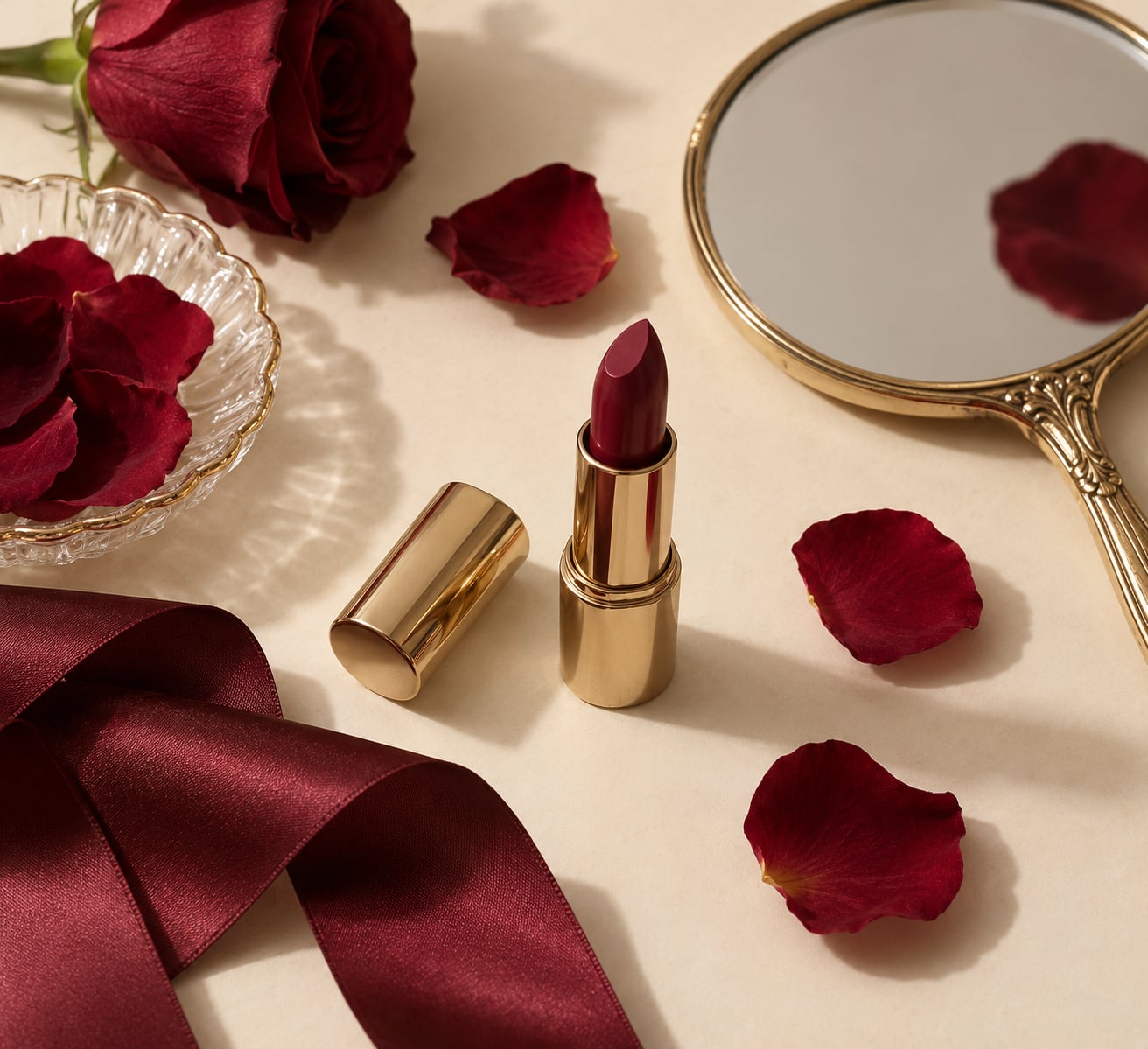
The Lover archetype works in beauty marketing by selling the feeling of being wanted rather than the performance of a formula. A Lover-coded brand competes on scent, texture, colour payoff and emotional closeness, so buying the product reads as an act of self-becoming that happens to work. Beauty suits it unusually well, because shoppers already buy cosmetics to feel more desirable, and the archetype amplifies a motivation that is already there.
What follows is the part most brand-archetype content skips: what the mechanism actually is, how it looks category by category, where it breaks, and how to test whether it fits your brand before you commit a year of creative to it. Updated for 2026.
Table of Contents
- What Is the Lover Archetype?
- How the Lover Archetype Works in Beauty Marketing
- Beauty Brand Archetypes: Quick Guide
- What Makes a Beauty Brand Feel Lover-Led?
- How Consumer Psychology Makes the Archetype Work
- How to Use Lover Archetype Marketing Without Stereotyping
- What Beauty Campaigns Demonstrate the Lover Archetype?
- How a Product and Campaign Example Can Work Together
- What Can Go Wrong When Beauty Brands Use the Lover Archetype?
- How Do You Test Whether the Lover Archetype Fits Your Brand?
- Frequently Asked Questions
- What is the difference between the Lover and Seductress archetypes?
- Which beauty products are best suited to Lover archetype branding?
- How can a beauty brand use the Lover archetype without relying on clichés?
- Does every beauty brand need to use one of the 12 archetypes?
- How can marketers test whether the Lover archetype fits a brand?
- Conclusion: Begin with Emotional Intention
What Is the Lover Archetype?
The Lover archetype is one of twelve brand personality archetypes. It positions a brand around desire, intimacy and sensorial pleasure, promising customers that using it will make them more attractive and more desired.
The name comes from Carl Jung’s work on recurring figures in myth, story and dream, later picked up by Carol Pearson and Margaret Mark as a marketing framework. In their version, every archetype runs on a paired motivation: what it wants, and what it fears. The Lover wants closeness, connection and pleasure. It fears being undesired, and it fears losing what it has.
Two things the archetype is not. It is not a claim about how your customers’ minds work. It is a positioning lens you use to decide what the brand is for, who it is for, and what it refuses to be. And it is not a rigid costume. A brand that runs Lover primary with Magician secondary behaves very differently from one that runs it alone.
How the Lover Archetype Works in Beauty Marketing
The mechanism runs on four levers: desire, intimacy, sensorial pleasure and projection.
Desire is the simplest one. A Lover brand assumes its customer wants to be attractive to someone, or to herself in a mirror. Fragrance leans on this almost exclusively, since a scent is invisible to everyone except the wearer and whoever comes close.
Intimacy is what a brand is being invited into. Makeup that behaves like a private ritual, a cream described as a night-time moment, a lipstick that appears to know the wearer’s undertone: each implies closeness between the brand and the person using it.
Sensorial pleasure supplies the proof. Texture, slip, finish, melt, scent trail. Beauty is one of the few categories where the product is literally experienced, and the Lover archetype gives marketers permission to describe that experience in words.
Projection does the heavy lifting. The customer supplies the desired person. A berry lipstick is not just pigment; it is the version of the customer who wore it once and got asked about it. The brand never has to promise transformation, because the customer finishes the sentence themselves.
That combination explains why Lover positioning shows up in repeat purchase rather than in first trial. It attaches the product to an identity, and identities get repurchased.
Beauty Brand Archetypes: Quick Guide
The twelve archetypes come from Pearson and Mark’s 2001 framework. Naming varies between sources, so you will see Regular Person, Everyman and Innocent used in overlapping ways, and Seductress used for what others call Lover. The core desire and the failure mode stay consistent across those variants.
| Archetype | Core desire | Shadow side in beauty |
|---|---|---|
| Innocent | Purity, simplicity, optimism | Naive, no point of view |
| Regular Person / Everyman | Belonging, honesty, accessibility | Forgettable, cheap-looking |
| Explorer | Freedom, discovery, authenticity | Unfocused, always rebranding |
| Sage | Understanding, truth, expertise | Cold, lecturing, clinical |
| Hero | Mastery, achievement, courage | Aggressive, over-promising |
| Outlaw | Freedom, disruption, authenticity | Offensive, exclusionary |
| Magician | Transformation, wonder, change | Hype, unproven claims |
| Creator | Imagination, expression, craft | Twee, unapproachable |
| Ruler | Control, exclusivity, prestige | Cold, elitist |
| Caregiver | Service, nurture, care | Self-sacrificing, unprofitable |
| Lover | Intimacy, desire, sensorial pleasure | Objectifying, cliché |
| Jester | Fun, enjoyment, spontaneity | Frivolous, unserious |
What Makes a Beauty Brand Feel Lover-Led?
You can spot a Lover-led beauty brand without reading its copy. Look for sensual language that describes feel rather than function, textures treated as events, private settings rather than public ones, and an emotional benefit stated plainly next to the product benefit.
The symbols are consistent too: warmth and deep colour, close framing, skin and hands, mirrored surfaces, candlelight, flowers and fabric. A brand can run Lover with almost no pink and no red at all, which is worth remembering before you default to those colours.
How Consumer Psychology Makes the Archetype Work
Beauty is bought under emotional conditions, and the archetype is built to work in them. A customer swatching a lipstick in a bright store with other people watching is in a different state from the one opening the same box at home. Lover positioning is strongest in the second state, which is why retail counters and packaging both try to create it.
Several well-documented effects do the work. Affect transfer means feelings attached to a sensory experience carry over to judgement of the product. Associative learning links a brand to the mood of the moments it appears in. Imagery does in a second what a paragraph of copy cannot, which is why close-up texture shots outperform ingredient lists. Ritual, meaning the small repeated sequence around a product, increases the perceived value of the thing at the centre of it.
Identity signalling matters most. When a customer buys a product partly to signal something about herself to others, the brand inherits the emotional weight of that signal. Fragrance and lipstick do this more than a moisturiser does, because they are socially visible.
Choice architecture quietly assists: fewer, more emotive shade names, gift sets framed as intimacy, samples that let someone try the ritual before buying it.
Be honest about the limits. Pleasure and desire are hedonic benefits, and hedonic benefits flatten under repetition. A scent that is thrilling in week three can be invisible in week twelve, so a Lover brand needs substance or story underneath, or the emotional lift runs out.
How to Use Lover Archetype Marketing Without Stereotyping
The archetype sits close to uncomfortable territory, which is why it needs a method rather than a mood board. This seven-step framework keeps it on the right side of the line.
- State the brand intention. Write one sentence on the relationship you want with the customer: who desires whom, and what they feel afterwards. If the sentence only works with an outsider admiring the customer, you are already in Seductress territory.
- Find the credible product attribute. The emotion has to attach to something real. Finish, texture, wear time, scent longevity, ingredient quality. Without a real attribute, the copy is decoration.
- Choose whose desire you are serving. Desire aimed at another person reads differently from desire aimed at the self, and from desire aimed at nobody in particular.
- Write sensorial language with discipline. Describe what is felt, not what is promised. Words about slip, weight, warmth and sound of application survive scrutiny; words about transformation rarely do.
- Build the visual codes around people, not bodies-as-objects. Framing, hands, closeness, expression and real skin texture carry intimacy without turning a person into a thing to look at.
- Design the experience, not just the ad. Unboxing, gift-with-purchase, sampling, loyalty messages written in a human voice. The archetype lives in the repeat contact as much as the launch.
- Test comprehension before you test appeal. If customers cannot say what the brand is for, no amount of beautiful sensuality will fix it.
One practical note. When beauty products are demonstrated on skin in your content, mention patch testing and keep away from medical or skin-result claims. Desirability is an emotional claim; efficacy is not yours to promise unless you can prove it.
What Beauty Campaigns Demonstrate the Lover Archetype?
Stripped of brand names, the strongest Lover campaigns in beauty share a small set of patterns.
- Sensorial close-ups. The frame fills with product texture, a brush loaded with pigment, cream moving across skin. The message is that the experience itself is worth looking at.
- Private rituals. A bathroom at night, a mirror, one person. The camera behaves like a confidant rather than an audience.
- Tactile ingredients. Ingredients described by touch and temperature, which turns a botanical into an experience.
- Intimacy over spectacle. Two people close, mid-conversation, unafraid of the camera. Attraction shown as attention rather than as display.
- Self-directed pleasure. Nobody else in frame. The customer is the audience and the subject, which is the version of the archetype with the least risk attached to it.
How a Product and Campaign Example Can Work Together
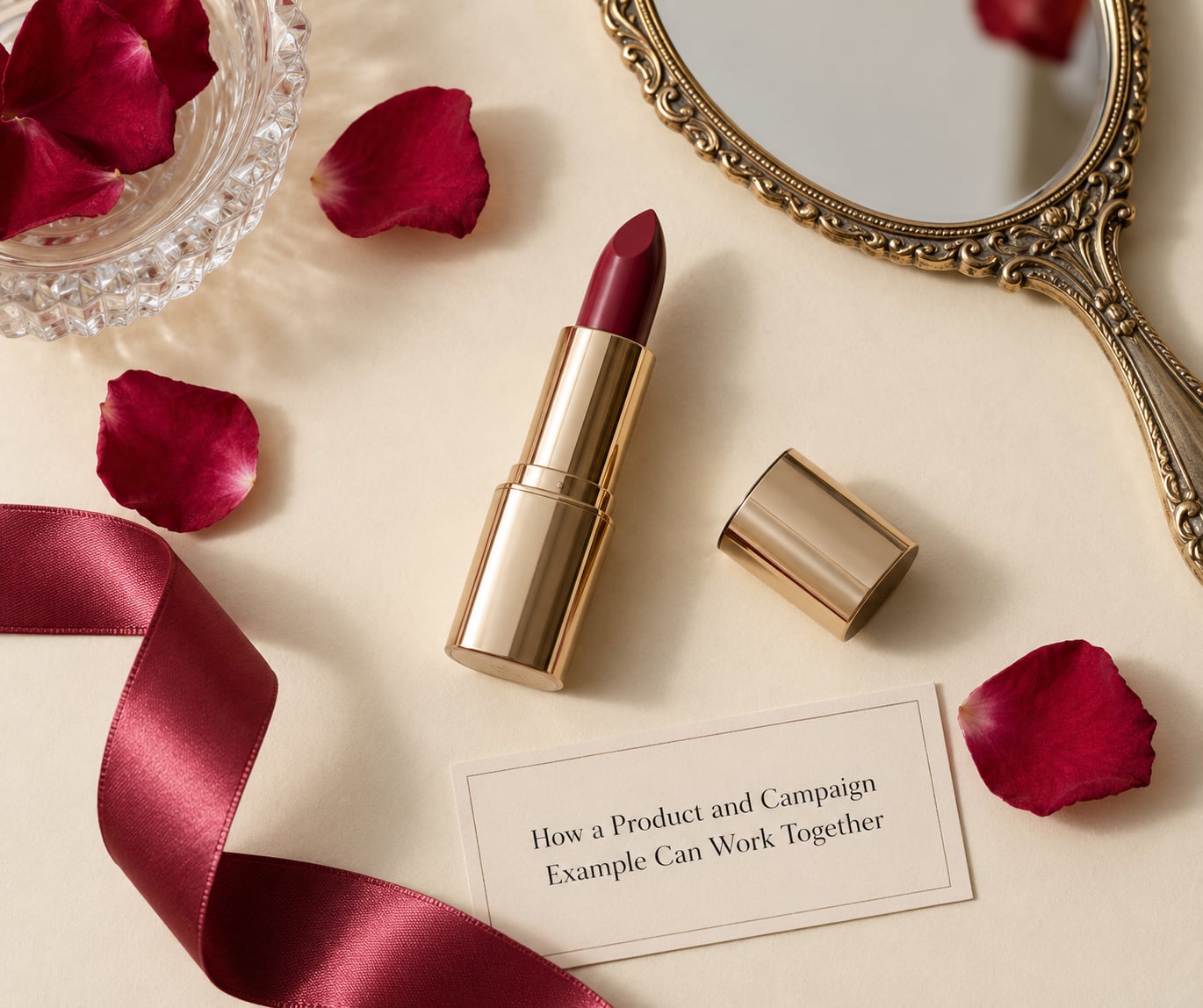
Consider a fictional deep berry lipstick launching in a crowded colour cosmetics category. The promise is a saturated, weightless finish that lasts through an evening. Everything downstream serves that promise.
The visual mood is a warm cream surface, low light, one mirror and a length of silk. The headline is about colour that stays present rather than about passion. The packaging cues are a weighty base, a matte cap, a shade name drawn from a place rather than an emotion. The application ritual is one deliberate pass, then a moment of looking.
Run the campaign as a short sequence of those private moments rather than one hero shot. Check the whole line back: no body treated as an object to be viewed, no claim the product cannot support, no pink gradient doing the emotional work on its own. Alignment across all five layers is what separates a Lover campaign from a pretty one.
What Can Go Wrong When Beauty Brands Use the Lover Archetype?
Seven failure modes show up repeatedly, each with an obvious correction.
- Overuse of pink and red. Every beauty brand reaches for the same two colours. Correction: use warmth, depth and finish as the sensual signal and let the palette come from the product.
- Forced seduction. Suggestiveness that has nothing to do with the product confuses people about what is being sold. Correction: return every sensuous element to a real attribute.
- Objectification. When the person in frame exists to be looked at, the campaign dates quickly and draws real criticism. Correction: put the customer in the subject position.
- Vague sensuality. Words like allure and luxury with nothing under them read as filler. Correction: replace each abstract word with one sensory detail.
- Category sameness. If your campaign is interchangeable with three competitors’, the archetype is doing no work. Correction: change the setting and the point of view, not just the shade.
- Mismatched product claims. Emotional promise ahead of a formula that does not deliver is the fastest route to a bad review section. Correction: audit the claim against what the product actually does.
- Stereotyped representation. Desirability presented as one narrow body type, age or gender excludes people who were going to buy. Correction: cast and shoot for the customer you actually have, including variations you would rather not style.
Archetype drift is the quieter version of the same problem. As a brand grows, it usually needs a second archetype to carry the new audience, and the temptation is to bolt on whichever one is fashionable. Primary and secondary archetypes work when both are visible in the creative; they stop working when only the name changes.
How Do You Test Whether the Lover Archetype Fits Your Brand?
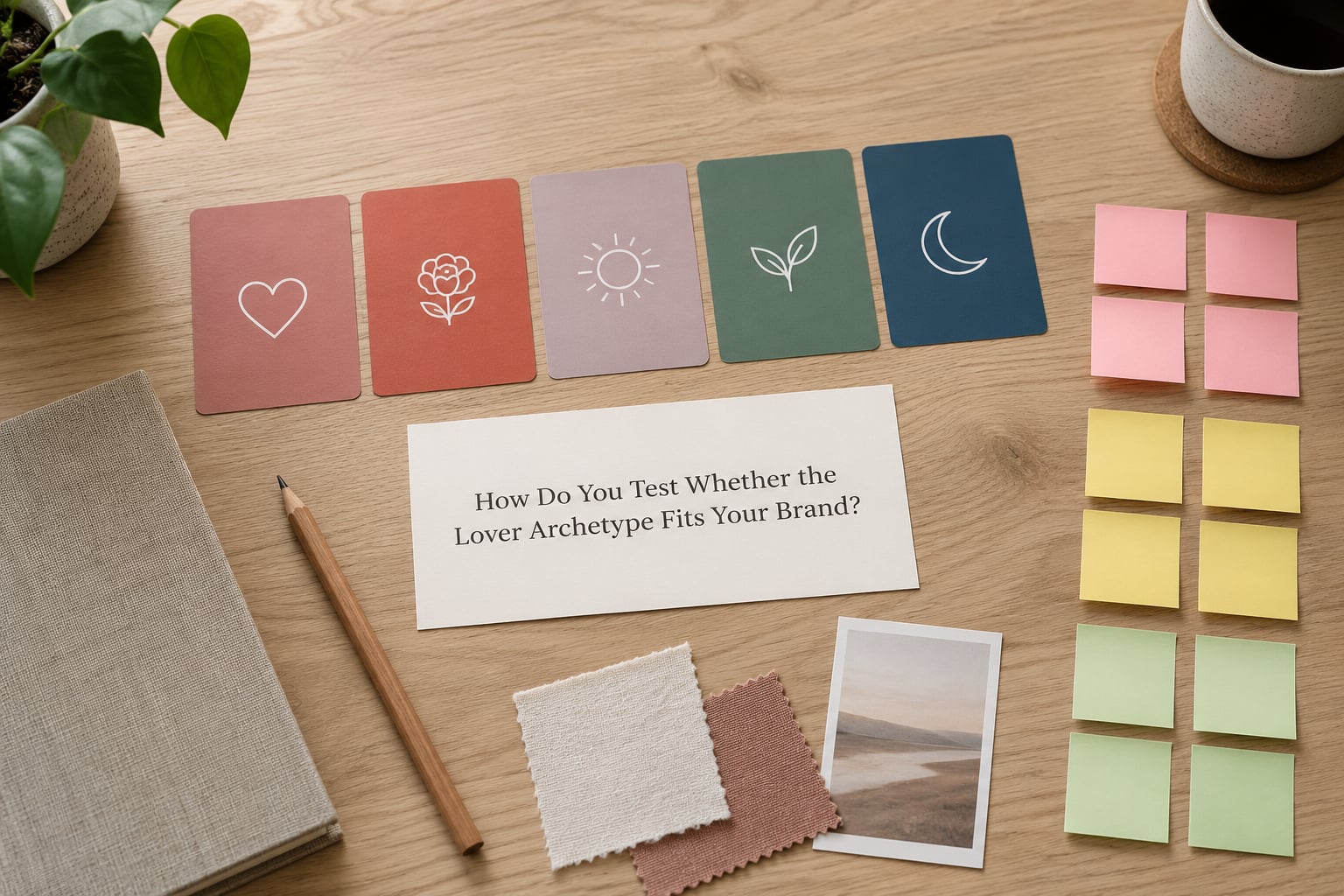
Start with comprehension, because it is cheap and it catches the most common failure. Show a small group of people who match your customer a mood board and a positioning line, then ask what the brand is for and who it is for. If answers vary wildly or land somewhere else entirely, the archetype is not yet communicated.
Next, test emotional response and distinctiveness. Ask what feeling the brand evokes, then show it beside two competitor boards and ask which they would remember. Feeling without distinctiveness means you have built a mood, not a position.
Then check purchase intent with the same people, and read the reason they give. Intent driven by texture or scent is a genuine Lover signal. Intent driven purely by a promotion is not.
Be clear about what this method can and cannot tell you. Small qualitative groups surface language, objections and confusion, which is exactly what you need before creative production. They cannot give you a demand forecast or a defensible conversion number. Anything quantitative needs representative research and enough sample to mean something, and no workshop substitutes for it.
Test the reversal too. Show customers the brand leaning Magician instead and ask the same questions. If the emotional response is stronger and comprehension holds, you may have picked the wrong archetype, and now you know it before the budget is spent.
Frequently Asked Questions
What is the difference between the Lover and Seductress archetypes?
In Pearson and Mark’s original twelve, Lover is about intimacy, closeness and sensorial pleasure between the brand and its customer. Seductress comes from later frameworks that split the same family into two: the Seductress creates desire in the customer, while the Lover celebrates connection and being desired. In beauty work, the practical test is where the desire points. Pointed outward at an onlooker, it reads as Seductress. Pointed at the relationship and the customer’s own experience, it reads as Lover.
Which beauty products are best suited to Lover archetype branding?
Fragrance is the purest fit, because scent is experienced privately and socially at once. Colour cosmetics follow, since colour payoff is sensorial and visible. Body care and premium skincare work well when the pleasure is real and the formulation backs it up. Makeup tools and brushes suit it through ritual and craftsmanship. Basic utility products rarely do, because there is no sensorial experience to sell.
How can a beauty brand use the Lover archetype without relying on clichés?
Anchor every emotional element to a real product attribute and describe what is actually felt rather than what is promised. Keep the person in the subject position rather than the object position, cast across the people who actually buy, and vary the settings and framings so the brand is not interchangeable with its competitors. Then test comprehension: if people cannot say what the brand is for, no amount of sensuality helps.
Does every beauty brand need to use one of the 12 archetypes?
No, and treating it as a requirement is the most common misuse of the framework. Archetypes are a decision tool, useful for choosing a positioning and keeping creative consistent. Plenty of successful beauty brands run on a clear functional promise or a specific cultural voice without naming an archetype. If the label helps you make sharper choices, use it. If it is only decorating a deck, drop it.
How can marketers test whether the Lover archetype fits a brand?
Run three cheap qualitative checks before spending on creative: test comprehension by asking customers what the brand is for, test emotional response and distinctiveness against two competitors, then test purchase intent and read the reason behind it. Add a reversal test, swapping in a different archetype to see whether the response is stronger. Small groups give you language and objections, not a conversion forecast, so anything quantitative needs representative research.
Conclusion: Begin with Emotional Intention
How the lover archetype works in beauty marketing comes down to one thing: it sells the customer’s own desirability back to them, through sensory detail and emotional projection. That works because beauty buyers already care how they are perceived. It fails when the sensuality detaches from the product, or when it excludes the people paying.
Three things to do first. Define the relationship you want with the customer in one sentence. Find the product attribute that makes that relationship credible. Then test one coherent expression of intimacy, pleasure and self-expression before you build a campaign around it.