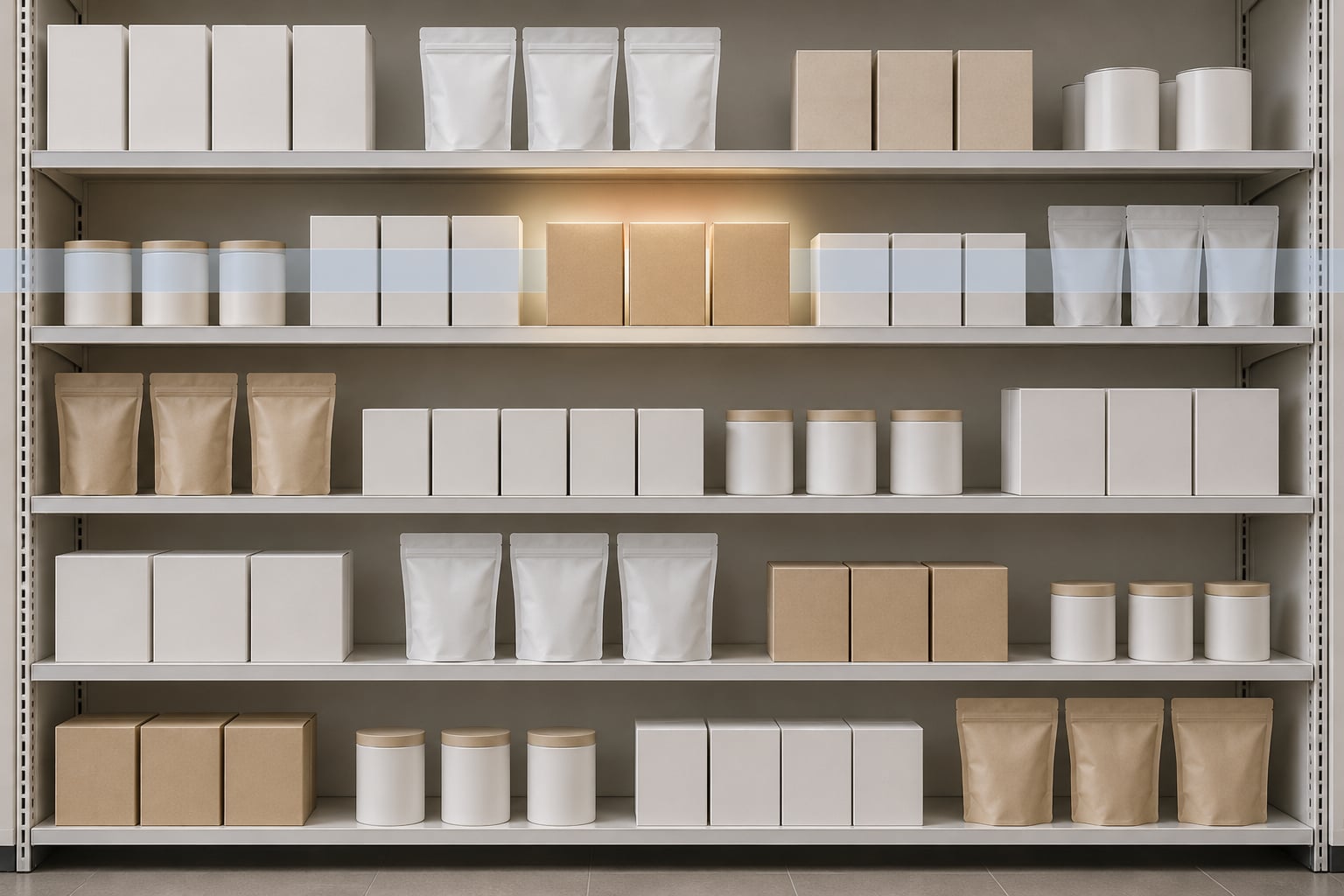
Before a shopper reads a single price tag or feature claim, position has already started the decision. That is how shelf placement affects product choice: it decides what gets noticed, what gets held in mind long enough to be compared, and what gets assumed about value and availability. A product at eye level is seen first and read at a glance; the identical product on the bottom shelf has to be found, crouched over and turned around. The research supports the effect without supporting the folklore around it, because some field experiments fail to replicate it. Here is what the evidence actually shows, and where a shopper or a category manager should be sceptical.
Table of Contents
- What Is Shelf Placement and Why Does It Matter?
- How Shelf Placement Affects Product Choice
- The five mechanisms behind how shelf placement affects product choice
- What Factors Change the Effect of Position?
- Which Shelf Positions Usually Get the Most Attention?
- Why Do Brands Pay for Prime Shelf Space?
- How Can Retailers Improve Product Choice Without Manipulating Shoppers?
- What Does the Research Say About Shelf Placement?
- Frequently Asked Questions
- What is the golden zone in a grocery store aisle?
- Does eye level placement really increase sales?
- Why are the products I like always on the bottom shelf?
- Does a gap on the shelf mean a product is discontinued?
- What are the disadvantages of product placement?
- How do retailers decide what goes where?
- Conclusion
What Is Shelf Placement and Why Does It Matter?
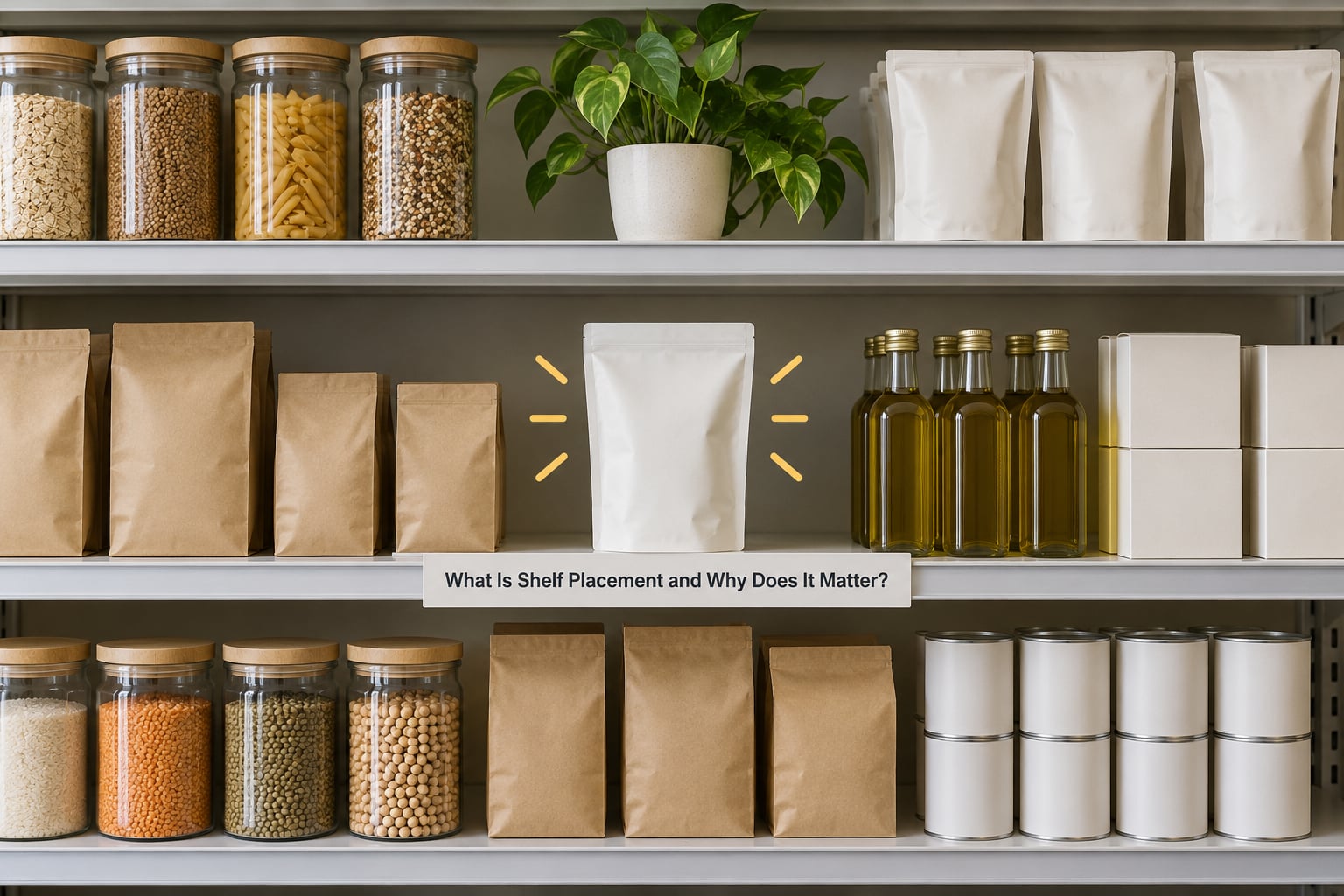
Shelf placement is the decision about where a product physically sits: which shelf, how high, how many facings, and what sits beside it. The planogram is the overhead schematic that fixes those decisions in advance, and the gap between the planogram and the shelf as found is called planogram compliance. A facing is one visible product front, so shelf share is usually counted in facings rather than square feet.
The vocabulary matters because the effect is measurable in ordinary retail terms. Ask whether extra shelf space lifted unit sales, whether facings stayed where the planogram said, and whether the display looked full. Those four answers cover most of what placement does.
Position is also easy to confuse with everything else that moves sales. Packaging contrast, price, promotion depth, in-store signage, distribution reach and a brand’s reputation all act independently. A well-known brand on the top shelf will outsell an unknown brand on eye level, and a stocked eye-level display of a weak product will still underperform. Placement is one input that works best when the others are already in place.
It still matters more than most people expect, because the shelf is where the decision is actually made. A shopper standing in an aisle has seconds, a half-formed memory of a list, and no intention of running an experiment. Wherever a product lands in that moment gets the evaluation; nowhere else gets the chance.
How Shelf Placement Affects Product Choice
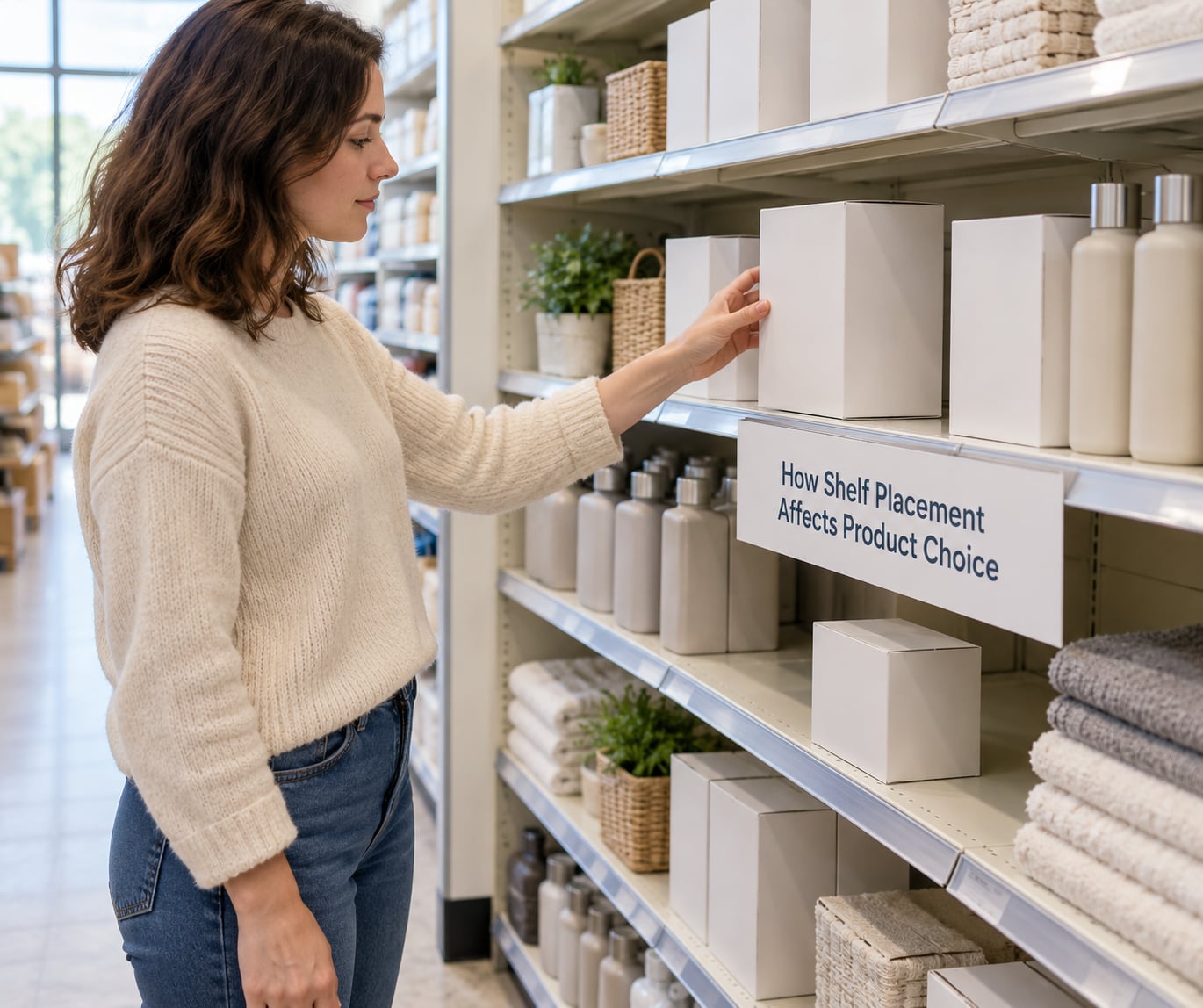
The short answer: placement changes which products enter consideration at all. It works through five mechanisms, and they can reinforce each other.
The five mechanisms behind how shelf placement affects product choice
- Attentional capture. A shopper’s gaze sweeps a narrow path down the aisle and across one or two shelf bands. A product inside that path is noticed; the same product outside it may as well not be in the store.
- Reduced effort. Front-facing packs at a reachable height can be read and picked up in a second or two. Low or crowded positions force a shopper to reach, separate packs and turn one around, and any friction of that kind loses the sale.
- Value inference. Height and space are read as signals before anything is read at all. Wider facings and a better position suggest a brand the store is willing to stand behind, which nudges expectations about price and quality.
- Display-completeness inference. An intact, full display reads as healthy. A display with gaps gets a different reading entirely, discussed below.
- Substitution and adjacency. Neighbouring products compete with and reinforce each other. Put a rival beside your pack and the comparison happens without a word; put a complementary product beside it and the two read as one decision.
The frustration shoppers describe online fits the second mechanism exactly. In a long-running r/LifeProTips thread, grocery workers explained that prime positions are set by corporate merchandising teams and follow margin rather than preference. On r/Target, shoppers post appreciation for aisles that are clean and correctly executed, which is a roundabout way of saying they notice when the planogram is not being followed. And on r/WalgreensStores, staff have complained about whole sections being moved overnight for reasons nobody explained to them. When a layout shifts without warning, people cannot find a brand they were certain was there.
That is a useful caution for anyone arguing placement always works. The effect depends on a shopper being able to recognise the product in the first place, so how shelf placement affects product choice is really half the story. The other half is legibility, familiarity and a price the shopper can process at a glance.
What Factors Change the Effect of Position?
Position is a nudge, not a switch. The same shelf produces different results depending on who is walking past, what they came for, and how crowded the block is.
| Factor | Why it changes the effect | Practical implication |
|---|---|---|
| Shopping mission | A shopper with a list is matching, not browsing, so position matters less; an unplanned trip is driven far more by what catches the eye. | Placement work pays most in categories bought on impulse or without a firm preference. |
| Brand familiarity | An unfamiliar pack outside the gaze path is rarely given a second look, while a known brand is recognised from the shelf edge alone. | New products need a deliberate position far more than established ones. |
| Category and product size | Heavy, bulky or tall packs change what fits where, so the usable height band shifts between categories. | Compare layouts within a category rather than across the store. |
| Crowding and facings | Few facings spread across a long shelf reduce visibility for every brand in the block, including the one the retailer wants to push. | Shelf share is a zero-sum allocation; gaining facings costs a competitor. |
| Number of comparables | A long block of near-identical packs raises comparison effort, and shoppers often settle for the most visible one rather than reading all of them. | Distinctive packaging works harder in crowded categories. |
| Store layout and traffic | Grid, loop, free-flow and diagonal layouts send shoppers past the same aisle in different sequences, so the same position is reached earlier or later. | Judge a position by where it sits in the route, not by its height alone. |
| Signage and price communication | Clear category signs let a shopper find a product regardless of height; unclear ones make position carry the entire burden. | Signage and placement solve the same problem, and can substitute for each other. |
| Whether the shopper is on a phone | A list on a screen narrows attention and makes search more literal, which tends to mute the effect of visual position. | Modern list-driven trips weaken rather than reverse the position advantage. |
Read that table as a set of dampeners. Every one of them weakens the effect of a better position, which is why the strongest placement results tend to come from categories with plenty of browsing and weak brand anchors.
Which Shelf Positions Usually Get the Most Attention?
Attention falls off with distance from the shopper’s natural sight line, but the ordering is not absolute, because shelf height interacts with store design and shopper height. What follows are relative tendencies, not laws.
| Position | What the shopper perceives | Measured effect on choice |
|---|---|---|
| Top shelf (above head height) | Distinctive but hard to inspect; often reads as secondary or overflow stock. | Noticeable in passing, rarely chosen when an equivalent product sits lower. |
| Eye level | Pre-eminent, easy to read and take down without effort. | The band most often linked to a measurable sales increase, though the effect does not replicate everywhere. |
| Upper-middle to waist (the golden zone) | Comfortable reading and reach, squarely in the scanning path. | The practical sweet spot used by most category teams for core volume lines. |
| Below knee level | Effortful; requires reaching down, often behind other stock. | Consistently weakest of the reachable positions for consideration, and easy to miss entirely. |
| Floor-level and bottom shelves | Associated in many categories with heavy, bulky or value lines, and often with the brand the shopper already buys. | Weak for new choice, but routinely carries the highest-turnover staples in a category. |
Nothing in this ordering says a bottom-shelf product is a worse product. It says a shopper is less likely to switch to it in the moment, which is a different claim and one that a good retailer will respect rather than try to overturn.
Why Do Brands Pay for Prime Shelf Space?
The commercial logic is straightforward: space is allocated where the category believes it converts best, and the retailer prices that space into the trade terms. Prime shelf space also changes what a shopper compares, because a larger block makes a brand easier to see, easier to remember and easier to leave with.
Category roles make this concrete, and the ideal height follows the role rather than the brand’s importance.
| Category role | What it is | Where it works best and why |
|---|---|---|
| Destination | A shopper comes specifically for this item, such as a specific coffee or a pet food they never swap. | Depth and reliable availability matter more than height, because the shopper will hunt for it. |
| Routine | Bought on autopilot from a small set of preferred brands. | Reachability and a clear block protect the repeat purchase; height is secondary. |
| Impulse | Bought because it was seen at the moment of decision. | Eye level and the end cap, since attention is the only trigger there is. |
| Seasonal | Relevant for a limited window, often in a temporary position. | Promotional height and facings, then a clean reset when the season ends. |
Horizontal position matters too. Brands are usually grouped with their own variants, a practice known as brand blocking, because a shopper who wants the category expects to find that brand among competitors. Category blocking, which gathers all of a product type together, makes cross-comparison easier. Complementarity is the third pattern: a sauce beside pasta, a filter beside a coffee machine, batteries beside a remote. Each pulls a small share of the traffic that goes past it.
None of this works the way the cynical version suggests. A prominent position does not rescue a product shoppers reject on price, and a placement premium does not make an item better. What it changes is the number of moments in which the product is a candidate at all.
How Can Retailers Improve Product Choice Without Manipulating Shoppers?
The disadvantages of product placement are worth stating plainly, since they are the reason some people distrust the whole category. Restricted and less convenient positions for alcohol and cigarettes are mandated in many jurisdictions rather than chosen, which is the clearest case of placement serving a public purpose instead of a margin. Beyond that, shoppers describe four recurring complaints: prices that feel inflated because of the prominent position, impulse items placed where a tired shopper will collect them without thinking, favourite products pushed to an inconvenient shelf, and new items appearing only as placeholders for the brand a shopper actually wants.
There are defensible ways to use the same psychology. Clear category signage lets someone find a product without walking the whole aisle, which reduces the cost of a low position instead of trying to abolish it. Keeping prices and product information legible is a placement decision as much as a signage one, since information nobody can read does not help. Reducing clutter works because crowding raises comparison effort for everyone. Testing one change at a time, on a subset of comparable stores, keeps a layout decision honest. And measuring with unit sales, dwell time, aided recall and choice share tells you which of those levers actually moved the outcome.
For a category manager, a five-step audit is enough to start: photograph the block as found, measure facings against the planogram, note gaps and reach, check whether eye-level stock is the line you would expect a shopper to consider, then change one thing and re-measure. For a shopper, the same logic runs in reverse. Scan the whole block rather than the first thing you see, read lower shelves properly, and treat the gap in a display as information about demand rather than about the product’s future.
What Does the Research Say About Shelf Placement?
The peer-reviewed work is more careful than the vendor blogs it sits beside, and two of the most useful findings are inconvenient for the industry. The studies below are the ones that actually measure an effect rather than assert one.
| Study | Design | What it found |
|---|---|---|
| Weimar (2020), Journal of Business Research and Marketing | Difference-in-differences on stores where product displays were relocated. | A statistically significant increase in unit sales for relocated products. The method compares treated and comparable untreated stores, so it controls for a general sales swing, but it establishes association with a deliberate change, not with height as such. |
| Kamasak, on the effect of shelf levels on product sales | Category-level analysis holding other variables constant. | An eye-level shelf position was associated with roughly a 5-7% sales increase for a private-brand tea. A single category, so treat it as an illustration of magnitude rather than a universal constant. |
| Razzouk et al., Journal of Retailing | Consumer inference experiments on display completeness. | When previous shoppers leave visible gaps, later shoppers tend to read the remaining units as less desirable. A display gets less attractive purely because it looks depleted. |
| The Effect of Shelf Space Positions on Perceived Brand’s Price and Quality | Cross-sectional survey linking position to perception. | Shelf position was associated with perceived price and perceived quality, supporting the idea that height acts as a signal rather than only as an obstacle. |
| Revisiting the Eye-Level Effect: A Field Experiment | Field experiment designed to test whether the eye-level advantage replicates. | The eye-level advantage did not hold reliably in the field. This is the single most important result on the topic, and almost no vendor content mentions it. |
Two method notes keep the rest honest. Eye-tracking tells you where attention goes, which is not the same as what gets bought; shoppers look at products and then put them back. Self-report tells you what people remember, which is reliably flattering to eye-level products. Only the sales-based designs speak to choice itself, and they can confound position with the extra facings or signage that usually travel with it.
A practitioner newsletter published by tdisdi.com recommends scanning from one side of the shelf to the other and concentrating attention between knee level and just above eye level. That matches the trade convention and it matches the field data, which is about as much agreement as this literature gets.
Frequently Asked Questions
What is the golden zone in a grocery store aisle?
The golden zone is the band between roughly waist height and eye level, the strip a shopper’s gaze sweeps first when approaching a shelf. It sits somewhere around 90 to 150 centimetres above the floor, though the exact height depends on the shopper: taller adults see it lower, children see it higher, and a wheelchair user sees it lower still. Because it combines easy reading with easy reach, it is the band most often given to core volume lines. If you are working out how shelf placement affects product choice in a category you know well, the golden zone is the first band to look at.
Does eye level placement really increase sales?
Sometimes, and less reliably than retailers imply. Field analyses have reported increases in the region of 5 to 7% for a specific category when other variables were held constant, and store-level relocation studies have found statistically significant gains. But a dedicated field experiment on the eye-level effect failed to replicate it consistently. Treat the band as a real advantage under certain conditions, not as an automatic rule.
Why are the products I like always on the bottom shelf?
Usually because the store classifies them as routine or heavy lines rather than as premium ones, and routine items are often placed where they are easy to restock. It can also be a space problem: a taller block of competitor packs pushes the brand down. The practical frustration is real, since a bottom-shelf product that has to be crouched over and turned around is easy to miss entirely, and shopkeepers say this is the most common complaint they hear.
Does a gap on the shelf mean a product is discontinued?
No. A gap usually means the product is selling faster than the shelf is being replenished, which is a sign of demand rather than abandonment. Research on display completeness found the opposite of what shoppers assume: visible gaps make people read the remaining units as less desirable, not as a bargain. An empty shelf with a price label still attached is a different case, and one worth asking staff about.
What are the disadvantages of product placement?
The four complaints shoppers raise most are inflated perceptions of price driven by prominent position, impulse items placed where a tired shopper will collect them without thinking, favourite products pushed to inconvenient heights, and new listings that crowd out established brands. There are also regulatory limits: alcohol and cigarettes sit behind the counter or in screened areas in many countries by law, not by choice. None of that makes position unuseful, but it does make transparency about it worthwhile.
How do retailers decide what goes where?
Category managers build a planogram that fixes each product’s shelf, height and number of facings, usually using sales data, margin, brand strategy and category role. Trade negotiations with suppliers then shape how much space each brand receives. A practitioner newsletter covering the topic recommends scanning one side of the shelf to the other and focusing attention between knee level and just above eye level, which is the convention most display work is built around.
Conclusion
Start with the decision point, not the shelf. Map the shopper’s route to the category, identify the moment a product has to win or lose the comparison, and change one position rather than a whole block. Then measure it against something honest: trial, repeat purchase, or aided recall a week later. That sequence is how you find out whether shelf placement affected product choice for your category, or whether it only moved the numbers around.