Studying shopper behavior in a store comes down to four moves: define one specific question, pick the method that answers it, watch or interview real shoppers against a fixed coding sheet, and turn what you recorded into a merchandising decision. Done well it takes a small team, a few days of fieldwork and a clear protocol. Done badly it produces a pile of notes and nothing to act on.
This guide is written for retailer marketing teams, category managers, brand-side shopper marketing folks and independent store owners who need a defensible process rather than a vendor pitch. Most pages on this topic are software companies explaining their own tool. This one stays tool-neutral and tells you the sequence, the sample you need and the mistakes that quietly ruin the data.
Last updated for 2026.
Table of Contents
- What You Need
- How to Study Shopper Behavior in a Store, Step by Step
- 1. Set a Clear Shopper Behavior Question
- 2. Choose the Right Store Research Method
- 3. Build a Representative Sampling Plan
- 4. Create a Consistent Observation Framework
- 5. Observe Without Distorting Shopper Behavior
- 6. Add Short Shopper Interviews
- 7. Analyze Behavior Alongside Context
- 8. Turn Findings into Store Actions
- Common Mistakes
- Frequently Asked Questions
- How many shoppers should I observe in a store?
- Do I need consent to observe shoppers in a store?
- What is the difference between observation and a shopper interview?
- Can in-store research use video cameras or eye tracking?
- When is a shop-along study useful?
- How do I reduce bias when observing shoppers?
- Conclusion: Start With One Focused Research Question
What You Need
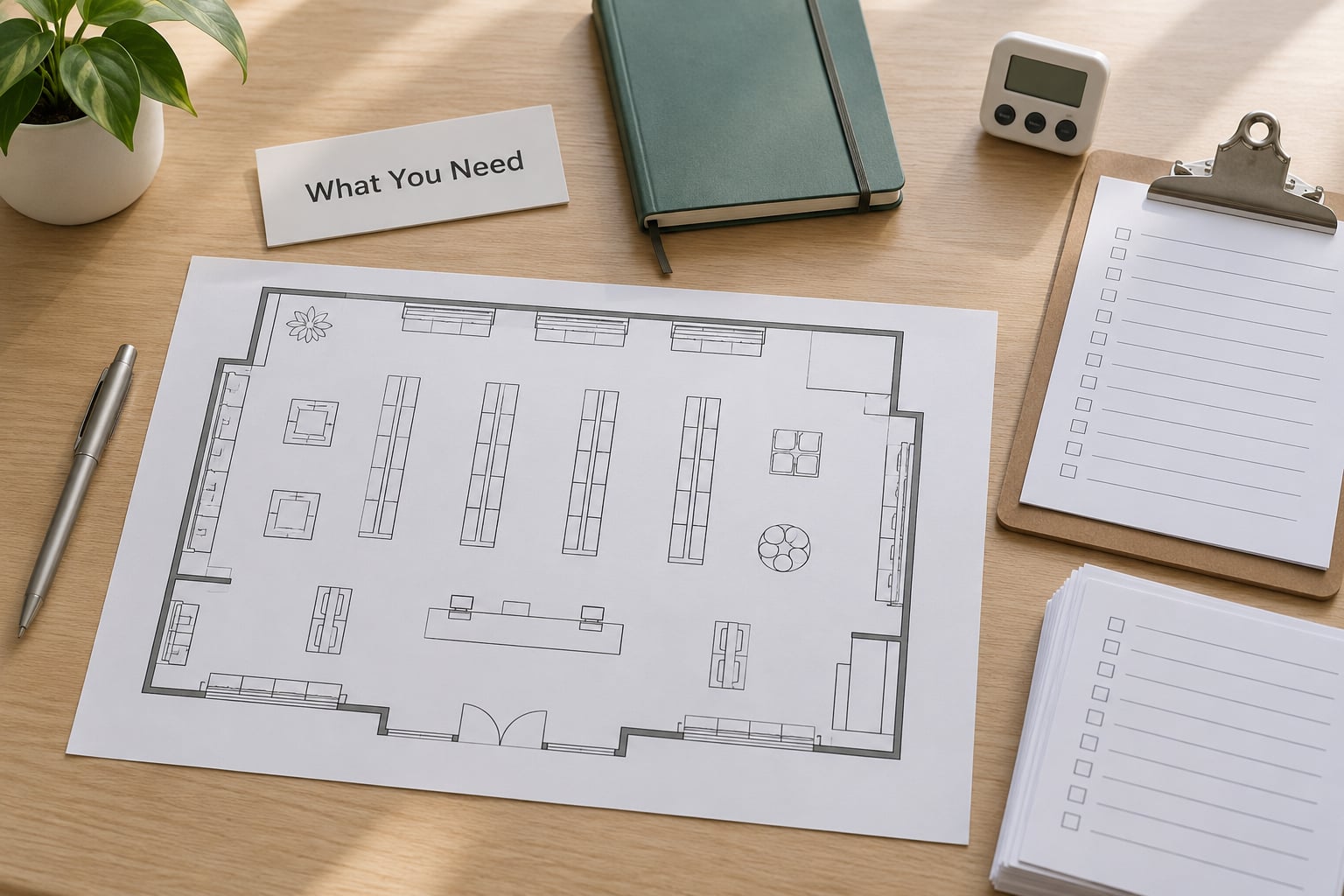
Eight things have to exist on paper before anyone walks onto a sales floor. Miss one and you are collecting impressions, not data.
- A research objective. One question, one decision it informs. If you cannot name the decision, stop there and fix the question first.
- A shopper sample. How many shoppers, in how many sessions, across which days and times.
- A store scope. Which locations, which zones inside them, and how long the field period runs.
- An observation method. Manual observation, intercept interviews, exit surveys, mystery shopping, eye tracking or footfall sensors, chosen deliberately rather than by default.
- An interview guide. Six to eight neutral questions, written down, for the intercept conversations.
- Consent and privacy safeguards. A one-sentence disclosure script, an agreement for recording, and a rule for what happens when someone says no.
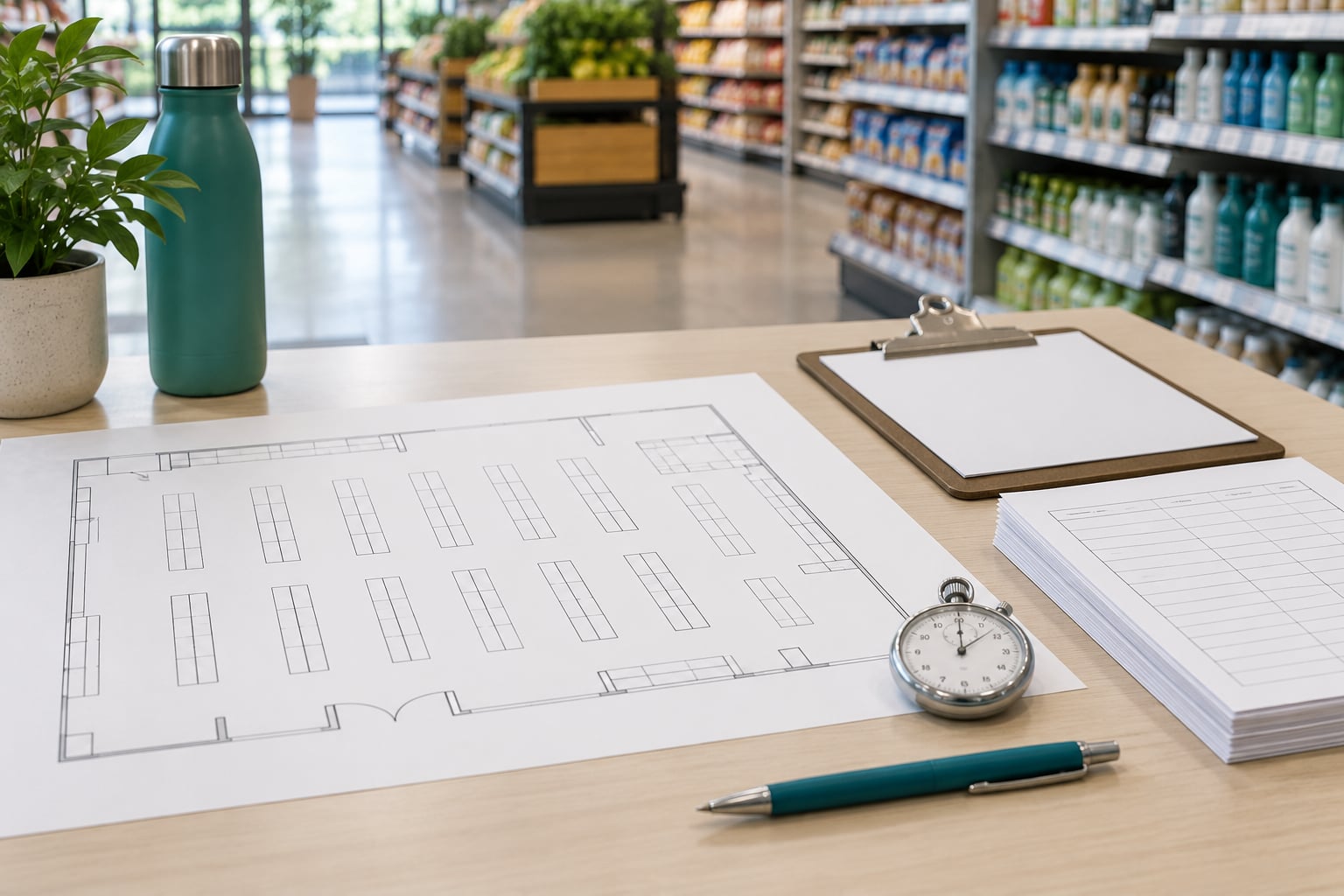
- Basic equipment. A clipboard, a stopwatch or timer app, a tally sheet, pens, and a quiet corner away from the entrance.
- An analysis template. The exact tables you will fill in at the end, created before the first session so the fields are not invented to fit what you saw.
The analysis template is the one most teams skip, and it is the one that saves the study. Deciding in advance how you will tabulate dwell time, path and purchase stops you cherry-picking the sessions that told you what you hoped.
How to Study Shopper Behavior in a Store, Step by Step
1. Set a Clear Shopper Behavior Question
A shopper behavior question names a decision point and a behavior you can actually watch. “Understand customer engagement” is a topic, not a question. “Why do shoppers walk past the endcap in aisle four without stopping” is a question you can answer with an observation sheet in a week.
Use this shape: How often, under what conditions, does [shopper type] do [observable behavior] before [decision point]? Every element has to be visible from three metres away or askable in one sentence.
Write down your success criteria alongside the question. A study usually lands on one of four findings: a physical layout, a planogram change, a sign or display, or a staffing instruction. If you cannot point at one of those, the study is not ready to run.
2. Choose the Right Store Research Method
Match the method to the question, the budget and the store layout. Structured observation gives you what shoppers do, interviews give you why, and instruments give you scale. Most convincing programs use two of them together.
| Method | What it measures | Relative cost | Typical sample | Main bias |
|---|---|---|---|---|
| Manual observation | Path, dwell, search, pick-up, put-back | Low | 60 to 200 shoppers | Observer presence |
| Intercept interview | Stated reason, trip purpose, recall | Low | 30 to 75 shoppers | Selection of willing shoppers |
| Exit survey | Attitudes at the point of exit | Low | 100 or more responses | Self-report bias |
| Mystery shopping | Staff compliance, service, stock, shelf placement | Moderate | 20 to 60 visits | Briefly altered staff behavior |
| Eye tracking | Fixation, time to first fixation, shelf visibility | High | 20 to 60 shoppers | Awareness of the headset |
| Footfall sensors | Traffic counts by zone and hour | Moderate | Continuous | Counts without meaning |
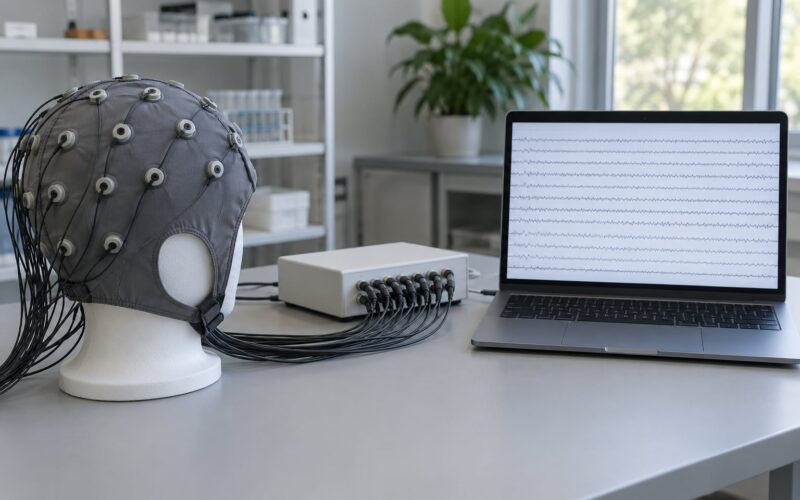
A plain method definition worth keeping straight: an intercept interview is a short conversation with a shopper caught at a chosen point, usually on the way out. Exit surveys are longer, often self-administered, and suffer from the same self-report gap as any survey. Eye tracking measures where a shopper looks and for how long, which is why it shows shelf visibility but says nothing about why they looked.
Practitioners working on mystery shopping programs point out that the method captures staff compliance, product placement and service quality in a single visit, which is why brands still use it for benchmarking. The same practitioners note that being visibly watched changes store behavior, so treat a mystery shopping result as evidence about the visited moment, not about the whole week.
3. Build a Representative Sampling Plan
A sample is representative when the shoppers you watched resemble the shoppers your store actually serves. Write down when, where and how often you will observe, and balance the plan before fieldwork rather than correcting afterwards.
Balance three things: store zones, so the entrance, category aisles and checkout are all represented; time blocks, so a Tuesday morning and a Saturday afternoon are both in the mix; and trip types, since a mission-driven weekly shop and a convenience stop behave nothing alike.
On sample size, aim for enough shoppers per zone to compare patterns rather than to produce a statistically representative census. Sixty shoppers spread across six sessions is a workable floor for spotting patterns. If you need to claim a difference between two zones, push past a hundred and report the sample size next to every percentage you quote.
Two weeks of sessions usually beats one busy Saturday. It lets you see whether a pattern holds across a weekday and a weekend, and it gives you a natural reliability check.
4. Create a Consistent Observation Framework
The observation framework is a codebook: a fixed list of behaviors, each with a neutral definition and a way to count it. Without one, two observers watching the same shopper will file different notes, and you will spend analysis time arguing about wording instead of reading patterns.
| Code | Behavior recorded | How to count it |
|---|---|---|
| DW | Dwell at a fixture | Seconds stopped within arm’s reach of the display |
| SR | Search movement | Any deliberate look along more than one shelf face |
| PU | Pick-up | Item lifted and held for more than two seconds |
| PB | Put-back | Item returned to a shelf other than its facing position |
| SK | Staff interaction | Verbal exchange lasting more than five seconds |
| EX | Exit without purchase | Departure from the zone with no item in hand |
Pick a recording interval that matches the behavior. Zone-level traffic can be tallied in five-minute blocks, but dwell and search need a stopwatch and a real start-and-stop moment. Train observers by having them watch the same fifteen shoppers separately and then compare codes; where they disagree, the definition is not specific enough yet.
Two people coding independently on a subset of sessions is the cheapest reliability check available to a small team, and it costs nothing but a second clipboard.
5. Observe Without Distorting Shopper Behavior
Shoppers change behavior when they know they are being studied. This Hawthorne effect is not a footnote in research, it is the difference between clean data and a flattering story, and it is why an observer standing in an aisle with a clipboard will produce different pathing than an observer seated near the entrance with a tally sheet.
Position yourself where a shopper does not have to alter their route. Sit at the edge of the zone rather than in the middle of it, keep the clipboard low, dress like ordinary store traffic rather than like a badge on a lanyard, and never stand between a shopper and the product they are reaching for.
Control the environment as far as you can. Note the weather, the time of day, whether a promotion was running, and whether staff were visible. Those five notes explain more variance in path data than most merchandising changes you will test later.
When something unusual happens, a spill, a queue, a fitting-room backlog, record it as a context event and keep observing. Do not coach, approach or explain your study unless you are running an interview, because a friendly word from an observer is an intervention.
If someone notices you and asks what you are doing, give a one-sentence answer: “I am watching how people use this aisle for work. Is that all right?” Accept no without argument, drop that shopper from the sample, and never photograph or film a person who has not agreed to it.
6. Add Short Shopper Interviews
Observation tells you that a shopper scanned the shelf six times and left. An intercept interview is how you find out they were looking for a 500 gram pack in a different brand, which is a fixable navigation problem rather than a demand problem.
Recruit respectfully. Approach a manageable number of people, explain the study in one sentence, tell them it takes about three minutes, and let them decline. Approach on the way out rather than mid-visit, since an interview during a trip pulls the shopper out of the environment you are studying.
Keep the questions neutral. Ask what they came in for and what they were looking for, not whether they liked the display. Avoid anything touching health, income, ethnicity or other sensitive personal details, and skip the interview entirely if the shopper seems rushed or irritated.
Record only with permission, tell people the session is being noted, and write down answers as short verbatim quotes rather than summaries. A shopper saying “I walked right past it, I never saw it” is more useful to a merchandiser than a satisfaction score of seven out of ten.
Volunteers are a biased sample by definition, so treat interview findings as explanations for the patterns in your observation data rather than as a separate set of results. Where the two disagree, the observed behavior usually wins.
7. Analyze Behavior Alongside Context
Start with the numbers: totals and rates per session, not impressions from the best afternoon. Compare zones against each other, and compare shopper groups only if your coding sheet captured group membership in a way that respects people’s privacy.
Then read the numbers against your field notes. A 70 percent put-back rate at one fixture means something quite different when the context line reads “new pack size, same shelf position” than when it reads “out of stock, substitute refused”. Quantitative patterns and qualitative context are not competing evidence; the second explains the first.
Look for alternative explanations before you settle on one. Did the promotion end mid-study? Did staffing change on day four? Did rain push people into the store from the car park? Any of those can produce a finding that looks like a merchandising problem and is actually a scheduling or weather effect.
Keep observation and interpretation in separate columns from the start. If a single session is driving a conclusion, say so plainly and run more sessions before recommending a change.
8. Turn Findings into Store Actions
A study ends with a decision, a measure and a date. Write the recommendation as one instruction someone can carry out: move the display to the entry point, add a directional sign at the aisle mouth, or reset the planogram to put the range in facing order.
Rank the recommendations by evidence strength, cost and reversibility. Fix the cheap, reversible things first, because they generate the follow-up data you need to justify the expensive change.
Define success before the change goes in. If the finding was that shoppers could not find the range, the measure is findability or search time, and the follow-up study is a repeat of the same codebook on the same zones, run the same number of weeks later. A follow-up using different zones and different codes cannot be compared, so keep the original framework intact.
Keep an evidence trail: the observation sheets, the codebook version, the session dates and context notes. It matters the first time a regional manager asks why a fixture moved.
Common Mistakes
Most failed in-store studies fail in the same eight ways, and each has a straightforward correction.
1. Vague codes. Coding “engaged shopper” means nothing. Fix: define the code as a countable action with a start and a stop, the way a dwell time or a pick-up has one.
2. Confounding variables. A new promotion, a holiday weekend or a staffing change gets recorded as a behavior change. Fix: keep a context line per session and note anything unusual in the first thirty seconds.
3. Over-reading small samples. Twelve shoppers in one session produce a story, not a pattern. Fix: set the sample floor before fieldwork and report the number next to every percentage.
4. Researcher influence. An observer who is too visible changes the pathing you are measuring. Fix: seated positioning, low clipboard, neutral clothing, no coaching.
5. Leading questions. “Did you like the new endcap?” tells the shopper what you want to hear. Fix: ask what they came for and what they looked for, then stay quiet.
6. Missing consent and privacy safeguards. Recording a conversation or filming a face without agreement is a problem you cannot repair afterwards. Fix: a written disclosure script, an explicit yes before any recording, and a drop rule when someone declines.
7. Ignoring context. A finding with no date, zone, weather or staffing note attached cannot be reproduced. Fix: build the context fields into the tally sheet, not into your memory.
8. Percentages without sample sizes. “Sixty percent of shoppers” from nine observations is marketing copy. Fix: write the fraction, then the percentage.
A few habits help. Reuse the same codebook every session so trends are readable, brief observers properly before fieldwork, and keep at least one session for the store or zone you are least worried about. A control zone is the cheapest way to tell whether a change actually did something.
Frequently Asked Questions
How many shoppers should I observe in a store?
For pattern-finding rather than statistical proof, observe 60 to 200 shoppers spread across at least six sessions. Cover more than one weekday and one weekend, and balance store zones so entrance, category aisles and checkout are all represented. If you plan to compare two zones or two shopper groups, push past 100 and report the sample size beside every percentage. Fewer than 30 observations is a story, not a finding.
Do I need consent to observe shoppers in a store?
You always need the store’s permission, and you need the shopper’s agreement before any recording, photography or interview. Plain observation of people in a public place generally needs no individual consent, but note that rules differ by country and state, so check your local guidance before filming anyone. Write a one-sentence disclosure, accept a no without argument, and drop that shopper from the sample.
What is the difference between observation and a shopper interview?
Observation records what shoppers actually do, such as path, dwell, search and pick-up, and it does not depend on anyone agreeing to talk. An interview asks shoppers why, giving you the trip purpose and the reason behind an action, but it recruits volunteers and brings self-report bias with it. The strongest studies run both, then use the interview to explain what the observation already recorded.
Can in-store research use video cameras or eye tracking?
Both are used regularly, with conditions. Eye tracking glasses record where a shopper looks, time to first fixation and shelf visibility, and work best in a lab-style shelf set-up or a consented in-store session. Video cameras are common for traffic counts and queue analysis, but you need signage or an equivalent notice, and facial recognition is a separate legal question. Both methods also make shoppers self-conscious, so expect some behavior change.
When is a shop-along study useful?
A shop-along is useful when the decision you care about happens across the whole trip rather than at one fixture. Watching a shopper move from entrance to checkout reveals navigation problems, search loops and abandoned missions that a single-zone observation misses. It costs more researcher time, it needs a clear consent agreement, and it slows the shopper down, so keep the follow-up short and ask the questions afterwards rather than while they walk.
How do I reduce bias when observing shoppers?
Reduce bias with position, protocol and honesty. Sit at the edge of the zone instead of standing in the aisle, keep the clipboard low, avoid a lanyard, and never coach or approach during an observation session. Use a written codebook with countable definitions, have two observers code the same fifteen shoppers to check agreement, and keep a context line for anything unusual. If a shopper asks what you are doing, answer plainly in one sentence.
Conclusion: Start With One Focused Research Question
Studying shopper behavior in a store is a sequence, and the sequence matters more than the equipment. Name the decision you need to make, pick the method that measures it, sample sessions that reflect your real traffic, code behavior against a written framework, and keep observation separate from interpretation.
Start small. Choose one decision point in one zone, run six sessions over two weeks, and record dwell, search and put-back against a codebook you wrote beforehand. Then change one thing, and run the same protocol again to see whether the behavior moved.