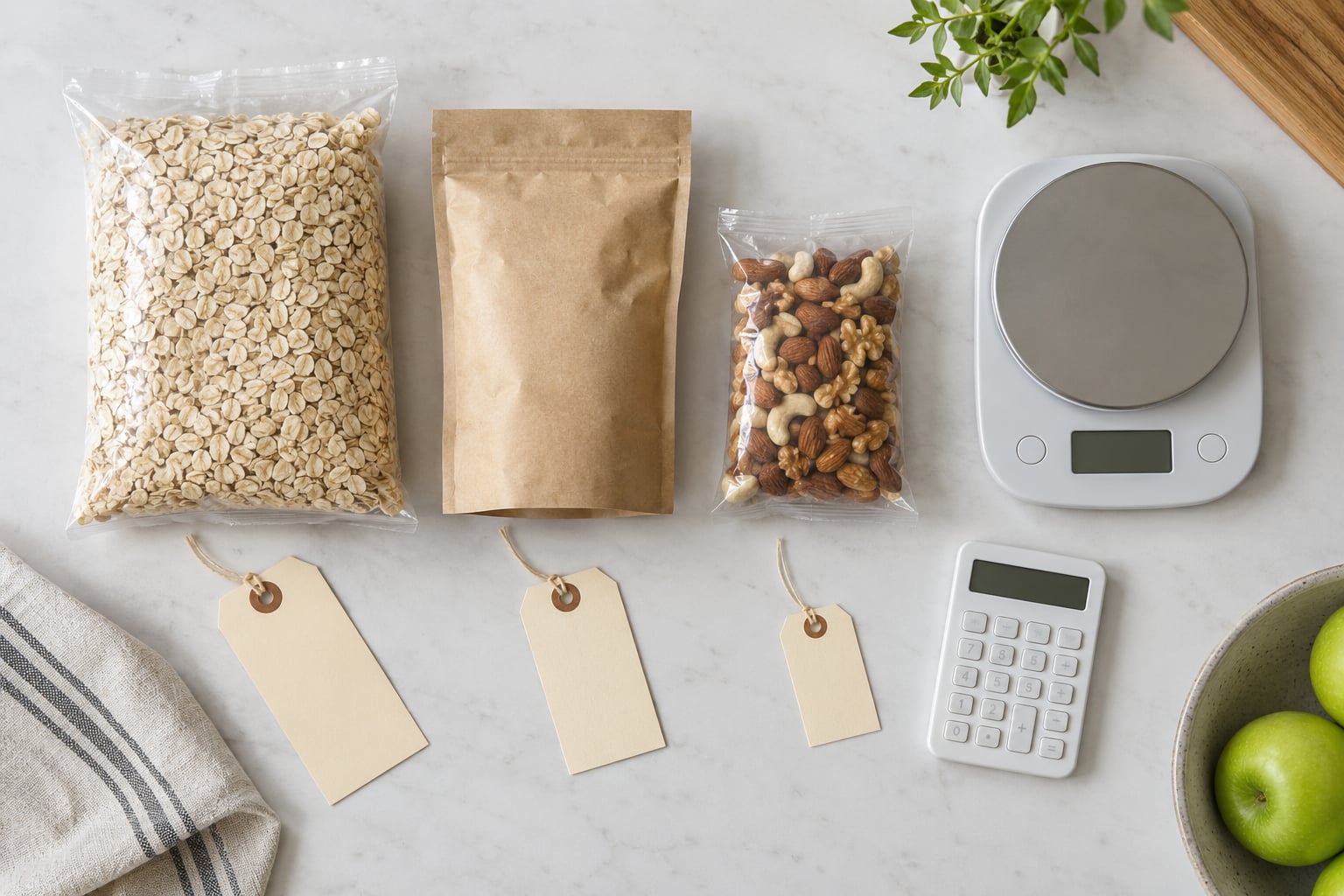
Unit pricing is the price of a product expressed per standard unit of measure — per ounce, pound, fluid ounce, quart, or count — printed next to the shelf price so shoppers can compare packages of different sizes on one basis. It changes what shoppers put in the cart because it changes the question they are answering: the shelf price alone asks whether an item is worth buying, while the per-ounce figure asks which version is cheapest per unit, and shoppers answer that second question by default.
The gap between noticing and using is wide. Research published in the Journal of Marketing found that of shoppers in stores that label unit prices, 64.5 percent were aware of the practice, 47.3 percent had actually used it while shopping, and only 37.5 percent had used it on their most recent trip. Awareness is common. The label is read in the moment far less often.
That gap is where the interesting behavior sits, and it explains why unit pricing changes what shoppers put in the cart in four specific ways:
- It moves shoppers between pack sizes of the same product, toward whichever package has the lower price per unit.
- It moves shoppers between brands, because a store brand can be compared to a national brand on the same scale.
- It moves shoppers up or down categories, since a per-pound comparison works between a store brand and a premium import.
- It moves quantity, encouraging more units per trip when the per-unit price falls far enough to justify storage and spoilage risk.
None of those shifts require a shopper to consciously decide to spend differently. The label does the arithmetic, and the arithmetic does the deciding.
Table of Contents
- What unit pricing tells shoppers
- Why unit pricing changes what shoppers put in the cart
- The main behavioral mechanisms behind the shift
- Why package size can change the basket even when spending does not
- What can make unit pricing misleading
- How to use unit pricing responsibly in a store or campaign
- Frequently Asked Questions
- What to do first
What unit pricing tells shoppers
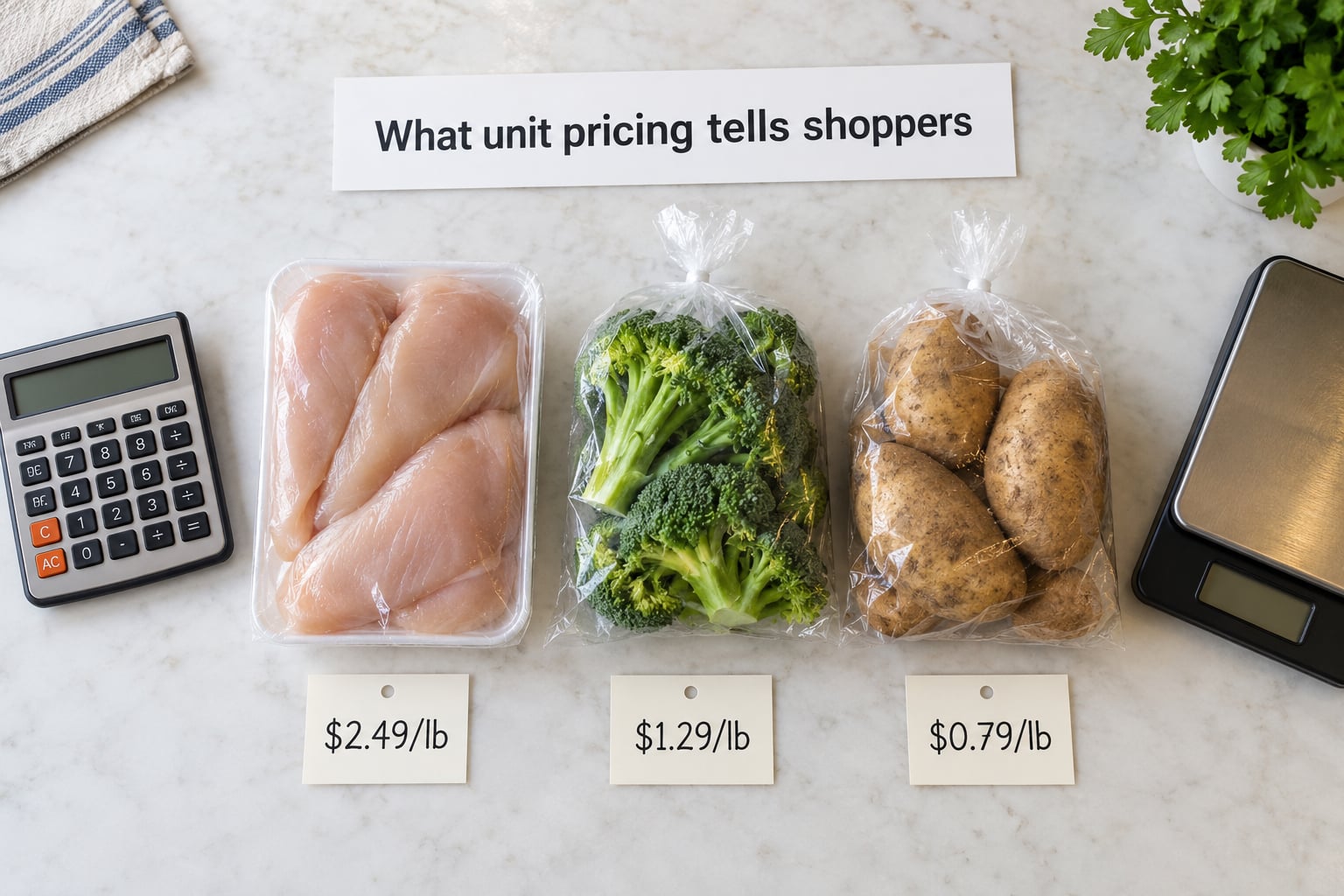
A unit price is the shelf price divided by the total amount of product in the package, expressed in the unit the retailer uses. That is the whole calculation, and it is deliberately simple.
| Number | What it is | Where it appears | What it tells you |
|---|---|---|---|
| Retail price | The amount you hand over for one package | Large bold figure on the shelf edge label | What leaving the store costs today |
| Unit price | Retail price divided by package contents | Smaller line beneath the price, or on the container | Which of two packages costs less per ounce |
| Effective unit price | Total cost of a multi-bought quantity divided by contents | Calculated by you, often from a multi-buy tag | What a bundle or tier actually costs per unit |
| Promotional price | A temporary reduction on the shelf price | Signage, endcap, or digital coupon | How long the current deal runs |
Three of those four numbers are about one package, and one is about a bundle. Confusing the bundle number with the shelf-tag number is the single most common misreading, and it matters more than any other error because multi-buys are deliberately priced to look competitive.
Display rules in the United States go back further than most shoppers know. Unit pricing became law in New Jersey in 1975, and the state exempted a list of categories that includes prescription medications, vitamins, alcohol, fresh meat, fish and poultry, frozen foods, and spices at or below a small container size. Small retailers, measured by sales volume and floor space, were also exempt. The federal picture is lighter: the National Institute of Standards and Technology published a unit pricing guide in 2014 recommending consistent practice, but online unit price display remains optional. There is no national requirement that a web shopper be shown the per-ounce figure at all.
Where the law does apply, the rules concern presentation: the unit price gets its own legible line, the unit of measure has to be stated, and figures are rounded in defined ways depending on whether the price sits above or below one dollar. Those constraints exist because shoppers who misread a label have no cheap way to catch the error themselves.
Why unit pricing changes what shoppers put in the cart
The direct answer is that unit pricing lowers the cost of comparing. A shopper holding two packages has to judge quantity by eye, which is slow and unreliable, or mentally divide, which most people avoid entirely. The label performs both steps in advance and hands over a finished number, so the lower per-unit price becomes the default choice among options that are otherwise similar.
Three things follow from that. Comparison stops being an effortful act, so it happens more often and across more categories. The comparison basis switches from package to unit, so package size becomes a variable the shopper can tune. And the number carries a value signal, because a brand that prices competitively per ounce reads as better value than one that does not, independent of any tasting.
How shoppers use a price-per-unit comparison
The in-store process has four steps, and it usually takes under a minute.
- Notice the second number. The eye is drawn to the large retail price. The unit price sits below it, in smaller type, and requires a deliberate second look.
- Confirm the unit matches. Comparing a per-ounce price to a per-fluid-ounce price, or to a per-count price, is meaningless. Liquid and weight are different measures.
- Line up two or three candidates. One comparison is an accident. A useful comparison holds the product roughly constant and varies pack size, brand, or both.
- Decide whether the saving is usable. A cheaper per-ounce price on a 64-ounce tub is worthless to a two-person household with no freezer. This is where the arithmetic meets reality and most unit-price-driven switches die quietly.
The worked example matters here, because the gap between package price and unit price is where the switch gets made.
| Package | Contents | Shelf price | Price per ounce |
|---|---|---|---|
| Small bag | 16 oz | 4.79 | 29.9 cents |
| Large bag | 32 oz | 8.49 | 26.5 cents |
| Family bag | 48 oz | 12.49 | 26.0 cents |
Divide each shelf price by the ounces and the ranking is clear. The small bag looks cheaper on the shelf tag and is the most expensive thing in the row per ounce. This is the arithmetic the label exists to do on your behalf, and running it is the whole point of the practice.
It also explains why the large bag does not always win. The family bag saves half a cent per ounce against the large bag — roughly two percent — which is rarely enough to justify doubling the outlay or taking on a week of storage. Most households stop where the per-unit saving flattens out.
How unit pricing changes brand and category choice
Because the label normalizes by unit rather than by package, it makes cross-brand comparison trivially easy. A shopper who would never switch from a national brand on price alone will switch when the store brand reads 3.10 cents per ounce against 4.05 cents for the name brand, because the decision now looks like arithmetic instead of a trade-off.
That switch is where the economics of grocery retail show up on the shelf. Store brands typically carry higher unit margins than national brands, so a per-unit label that pushes shoppers toward them is not neutral information. It is a margin decision printed on a shelf tag.
Category switching works the same way but requires a mental step first. Comparing a store-brand rice to a premium imported one per pound is harder than comparing two bags of the same rice, because the shopper has to accept the two products as substitutes. Unit pricing nudges that acceptance by placing both numbers in the same visual field, and a sizable per-unit gap often does the rest.
There is a third move that gets less attention: staying put. Sometimes the per-unit comparison confirms the purchase the shopper was already leaning toward, and the label removes the doubt that would have led to a switch. In that case unit pricing changed nothing visible in the basket. It still changed the basket, by removing the alternatives that were under serious consideration, and those removed alternatives are the reason the chosen item shows up in sales data at all.
Supermarket trade data supports the direction of travel. Reported research on value brands tracks declining unit sales across many food and beverage categories as shelf prices rise, with shoppers trading down as the gap widens. The per-unit label is one of the mechanisms that makes trading down feel like a decision rather than a downgrade.
The main behavioral mechanisms behind the shift
Describing unit pricing as “informative” is only half right. It is informative and it is a nudge, and the nudge works through several channels that reinforce each other.
Reference prices and anchoring. A shelf price of 8.49 for a bag is anchored against a memory of what that bag used to cost. A price of 26.5 cents per ounce is anchored against nothing in particular, because most shoppers have no stored number for cents per ounce. The unit price therefore starts from a neutral position while the shelf price starts from a loaded one.
Effort reduction. Any comparison that requires mental arithmetic will lose to a comparison that does not. This is the mechanism with the strongest evidence behind it and the one retailers rely on most.
The package-size heuristic. Scale reads as value even before any number is consulted. Unit pricing either confirms that instinct or quietly contradicts it, which is exactly why shoppers who glance at the large package and move on are sometimes wrong, and sometimes right, with no consistent rule they can articulate.
Perceived quality and the value signal. A per-unit price that reads very low can license a cheaper product to feel better than it did a moment earlier. Budget signals work in the other direction too: shoppers constrained on money scan specifically for the smallest per-unit figures, which is why the label is disproportionately useful to households managing a fixed budget.
Monetary saving versus total basket cost. Here is the part most listicles miss. Lowering the price per ounce is not the same as lowering the bill. A shopper who switches to a larger package saves per unit and spends more in absolute terms that day. The next visit may carry less, or the savings may never materialize if the food spoils in the back of the fridge.
Distinguishing those two outcomes is the most useful habit a shopper can build, and it is also the reason unit price alone is an incomplete decision rule. The number describes a rate, not a budget.
It is worth saying plainly how little shoppers usually know about which mechanism is working on them. The person reading a 26-cent-per-ounce figure has no idea whether the low number came from a bigger package, a cheaper formulation, a promotional discount that ends this week, or a deliberate choice to price the large pack high so the single-serve pack carries the volume. From inside the aisle all four look identical, and the shopper treats them all as “good value,” which flattens very different offers into one feeling.
Keeping the mechanisms separate also explains why identical shelf situations produce different carts. A household of four with a chest freezer and a tight budget reads the same label as a household of one in a studio apartment, and the budget side pushes them toward a large pack while the storage side pushes them away. The per-unit number is the same. The decision is not.
Why package size can change the basket even when spending does not
Unit pricing does not need to cut the bill to change the cart. Buying more of something this week so that next week’s trip is smaller is a real change in behavior, and the shopper’s pantry and next receipt both show it even though monthly spending never moved.
Retailer-side research separates three effects that all look identical in the weekly numbers. Purchase acceleration means the same volume simply arrives earlier. Consumption growth means the shopper actually uses more. True incrementality means the shopper would not have bought the product at all without the offer. Of the promotional volume lift in quantity pricing programs, roughly 9 to 69 percent is attributed to purchase acceleration and 10 to 56 percent to increased consumption, with the balance treated as genuinely incremental.
A large field experiment across more than 14 million consumers found that quantity discounts lifted purchased quantities by 6.7, 11.2, and 44.9 percent at the three discount levels tested, with virtually no measurable revenue impact. The volume moved and the money did not, which is the clearest available evidence that shoppers buy more and spend about the same.
For the shopper, the practical version of this is simple. A unit-price-driven switch into a bigger package only helps if the extra quantity gets used before it spoils. For shelf-stable pantry goods, usually yes. For fresh produce or anything freezing badly in a home freezer, often no, and the per-unit saving evaporates into waste.
It can also push spending up. A household that upgrades from a 32-ounce container to a 64-ounce one has raised its outlay for the trip. Whether that is a gain depends entirely on whether the second container gets finished before the next shop.
Shopping schedules matter more than shoppers expect here. A household that shops weekly and buys a monthly quantity has room to absorb a larger pack; a household that shops twice a week cannot, because there is no storage gap in which the bulk advantage can be collected. The unit price does not change between those two households, and the identical label correctly produces opposite decisions.
The same logic applies to the case where unit pricing changes nothing at all. If a household was already buying the 48-ounce package and the label confirms it is the cheapest per ounce, the label has saved zero money and still shaped the basket by removing the reason to try anything else. Absence of change is a valid outcome of the mechanism, not a failure of it.
What can make unit pricing misleading
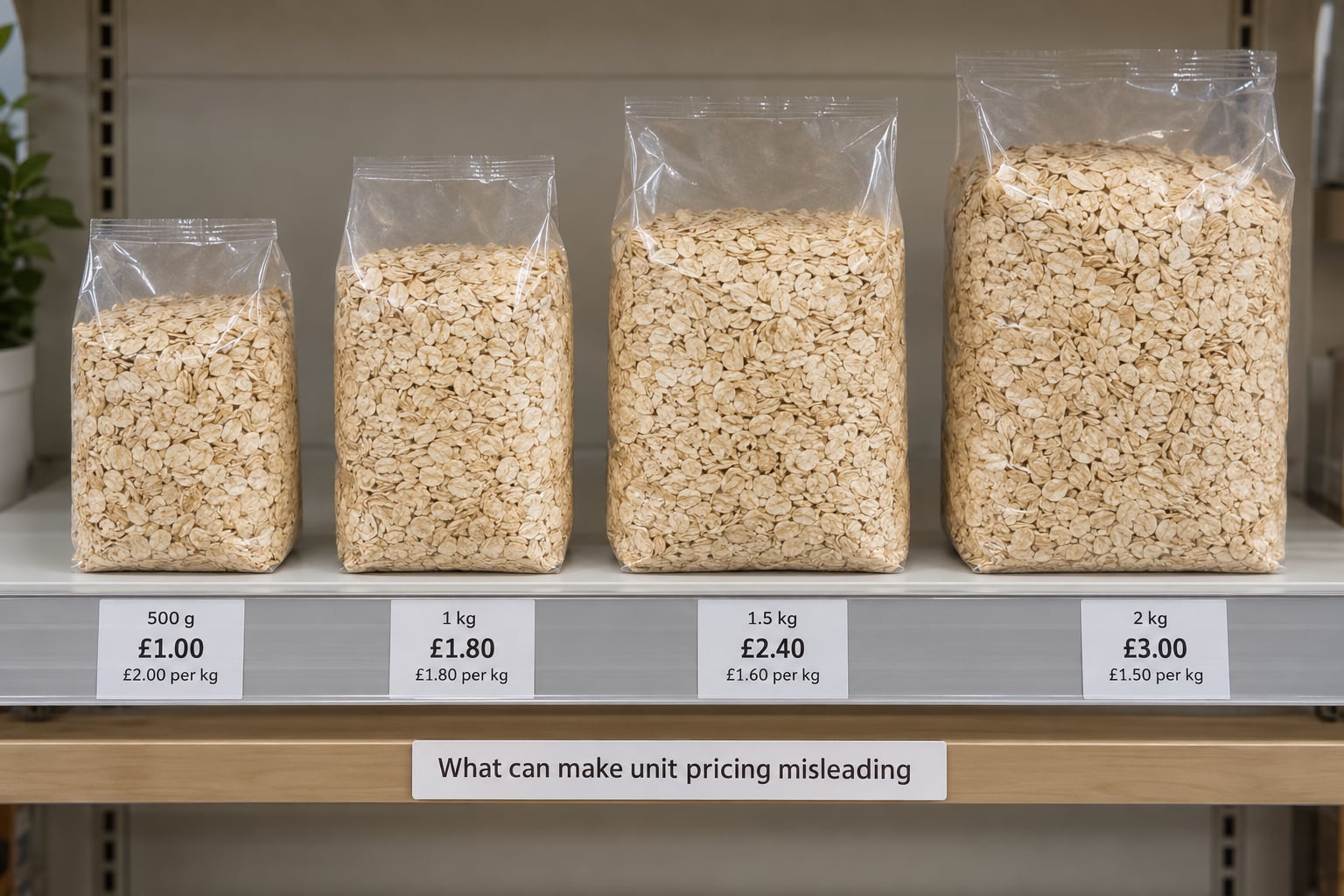
Every failure mode of unit pricing comes from the same place: the label is only as meaningful as the unit it uses.
The bigger package is sometimes the worse deal. This is the counter-example that gets repeated most often in shopper forums, and it deserves the space. A thread on r/Frugal documented coconut milk where the large container was labeled at about 4.6 cents per fluid ounce while the smaller container came in at roughly 4.4 cents. The scale assumption the shopper brings to the aisle is wrong there, and the label is the only thing that catches it. The same poster notes the pattern is inconsistent — sometimes the larger pack genuinely is cheaper per ounce — which is precisely the problem: shoppers cannot learn a reliable rule and have to read the tag each time.
Different products are not comparable. Fresh carrots and canned carrots both have a price per pound. The numbers are not comparable, because a pound of one is not a pound of the other in any sense a shopper cares about. Same with a count-based measure: 12 large eggs and 18 standard eggs have a count price, but not an equivalent one.
Different units do not convert cleanly. A per-fluid-ounce price and a per-weight price describe different things. Where a package lists both, and where the conversion depends on density, the shopper is being asked to do chemistry in the aisle.
Multi-buys contradict the per-unit logic. A “buy three, save” offer is priced so that the effective unit price beats the shelf price, which means the tag’s per-unit figure and the promo’s implied per-unit figure point in different directions. Whichever number the shopper notices first tends to win.
Rounding flattens real differences. Two packages whose true per-unit prices differ by a fraction of a cent can print identical figures. Near the top of a price range the gap is worth reading past the printed number.
The exempted categories have no label at all. Fresh meat, fish, poultry, frozen foods, vitamins, and alcohol are largely outside unit pricing requirements. The categories a shopper most wants to compare by weight are often the ones where no comparison is offered.
The typography carries the message. Retail price gets the bold, large type. The unit price gets a smaller line beside it. That is not a technicality; it is a design choice about what the shopper sees first, and shoppers consistently report noticing the larger number.
What unit pricing cannot tell you, regardless of how carefully you read it:
| Unit price does tell you | Unit price does not tell you |
|---|---|
| Which package costs less per ounce | Whether the product is better made |
| Whether a store brand undercuts a name brand | How many servings a package yields |
| Whether a family size beats a single size | Whether the ingredients or nutrition suit you |
| Whether a multi-buy is genuinely cheaper | Whether the package will be used before it spoils |
| Whether the sale price is worth the trip | Whether the price is the best this week elsewhere |
A label showing a very low price per ounce on a food with a short shelf life can be actively misleading, because the per-unit figure assumes full consumption that never happens.
How to use unit pricing responsibly in a store or campaign
For shoppers, the habit is short: read the second number, check the unit, compare two or three items that are genuinely substitutes, then ask whether you will use it. That last question is the one that separates real savings from arithmetic fiction, and it takes longer than the division but saves more money.
A 60-second version, for the aisle:
- Find the unit price on the largest package and on your usual package.
- Verify both use the same unit of measure before believing any difference.
- Compare across two brands, not just two sizes.
- Divide the price gap by what you will realistically consume before the next shop.
- If the multi-buy per-unit figure beats the shelf tag figure, work out the total outlay for the quantity you actually need.
For retailers and campaign teams, the same psychology cuts both ways, and the responsible version is not complicated.
Use one unit consistently across the category so a shopper can compare across brands, not just within a shelf. Put the basis of the calculation where the shopper can see it, because a per-unit figure without a stated unit of measure is a number rather than information. Place the label where the decision happens — the shelf edge or the package, not buried in a list shoppers never open. Keep the typography level with the shelf price rather than subordinate to it. Show the effective unit price for a multi-buy alongside the shelf-tag figure instead of letting two different numbers compete for attention.
And do not imply a saving the shopper will not collect. A per-unit price on a package the household cannot finish is a saving that does not exist, and a shopper who discovers it once stops trusting the number. The label works because it is believed; anything that spends that belief on a comparison the shopper cannot act on is borrowing from the next purchase.
There is a fair objection here. Retailers publish unit prices because they create trust and because the practice is regulated in places, but a label that reliably redirects shoppers toward the higher-margin pack is not serving the shopper’s interest. Transparency and manipulation are made of the same material, and the difference is whether the comparison shown is one the shopper could have made for themselves.
Frequently Asked Questions
What is unit pricing in grocery stores?
Unit pricing is the price of a product expressed per standard unit of measure, such as per ounce, pound, fluid ounce, quart, or count, printed next to the shelf price. Its purpose is to let shoppers compare packages of different sizes and different brands on a single basis instead of guessing at quantity from the package. It appears on the shelf edge label, on the container itself, and in many online grocery listings.
What does unit price mean in retail?
The unit price is the retail price of a package divided by the total amount of product inside it, expressed in a stated unit of measure. A 32-ounce bag listed at 8.49 works out to about 26.5 cents per ounce. It answers a different question from the retail price: the retail price tells you what leaving the store costs today, while the unit price tells you which of several options is cheaper per ounce.
Why is the bigger package not always cheaper per ounce?
Because pack size is a pricing decision, not a physical law. Retailers set per-unit prices to steer demand, and shoppers have documented cases where a large container carried a higher price per fluid ounce than the small one next to it. The bulk assumption is right often enough to feel reliable and wrong often enough to cost money, which is why the label has to be read every time rather than treated as a shortcut.
Does unit pricing actually save money?
Only when the per-unit saving survives contact with your household. A larger package saves per ounce and often costs more at the till, and the difference only comes back if the extra quantity gets used before it spoils. Research also shows a wide gap between noticing and using: 64.5 percent of shoppers in labeling stores were aware of unit pricing, but only 37.5 percent had used it on their last trip.
What does unit price not tell you about a product?
Nothing about quality, ingredients, nutrition, or how many servings a package actually yields. A low price per ounce tells you nothing about whether the food gets eaten before it expires, how it compares to another brand’s nutrition, or whether a count-based measure like eggs is equivalent across sizes. Common categories including fresh meat, fish, poultry, frozen foods, vitamins, and alcohol carry no unit price label at all in many jurisdictions.
What is the 5 4 3 2 1 rule for groceries?
It is a store-aisle habit, not a pricing rule. The idea is to pick five vegetables, four fruits, three proteins, two starches, and one treat or condiment, mostly from what is in season. Some shoppers use the per-unit label to check whether the frozen or canned version is cheaper per ounce than the fresh one. It has nothing to do with how unit prices are calculated or displayed.
What to do first
Start with the second number on the label, not the first, and confirm both candidates use the same unit of measure before you believe any difference. Then ask the question no label answers: will this household actually use it before it goes off or gets frozen?
That single check separates the shoppers who gain from unit pricing from the ones it misleads. Everything else — comparing store brands, working out whether a multi-buy beats the shelf tag, deciding if a family size is worth the storage — follows from getting those two steps right.
For retailers and campaign teams, the takeaway runs the other way. Show one unit, show the basis, put the figure where the decision happens, and publish an effective unit price for multi-buys instead of letting a promo number compete with a shelf-tag number. A label the shopper could not have calculated for themselves is the only version of this that is worth anything, and it is the only one that survives contact with a deal-literate customer.